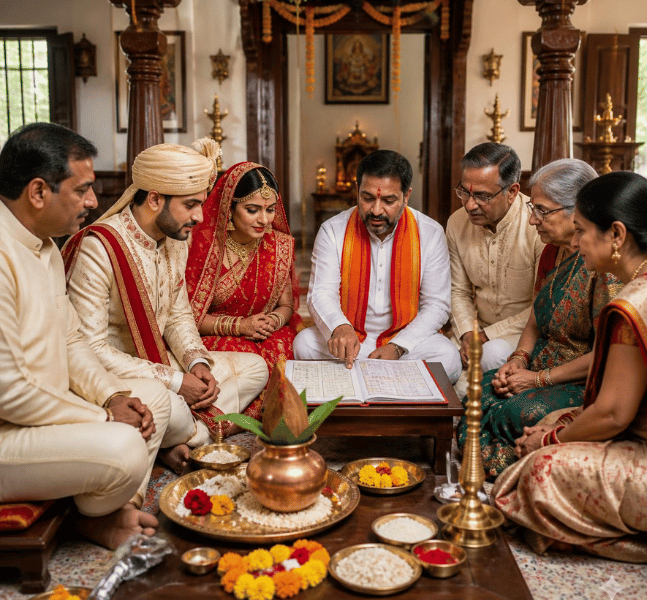
The selection of The Right Time For Marriage is one of the most crucial decisions for Gujarati households because marriage is considered to be a holy alliance between two people, two families, and their coming generations. Wedding planning in Gujarati society does not merely involve considerations regarding convenience or availability of the time. In addition to these aspects, there are other factors related to religion, good luck dates, climatic conditions, and cultural traditions that are also taken into account. These customs are followed with the belief that marriage in a favorable period will ensure happiness and harmony.
Traditionally, a Gujarati marriage is arranged after referring to Hindu Panchang and consulting a skilled astrologer. Aspects like position of planets, Nakshatra, Tithi, Lagna, and Muhurat are considered very seriously in order to identify the best time for the marriage. Despite being busy in their jobs and traveling, many people consider these aspects when making a decision about their wedding day.
Weather conditions are an important factor that needs to be considered when choosing the Best Time for Marriage. The pleasant winter season is the preferable one due to good weather conditions for outdoor marriages. The festival seasons along with the availability of family members also make an impact on the wedding dates, particularly for big Gujarati families.
The decision of selecting an auspicious date to get married becomes very significant when it comes to the NRIs as they have to coordinate vacation timings, international travel, visa issues, and family meetings apart from selecting the wedding Muhurat. The proper planning of the wedding makes it possible for families to follow their Gujarati tradition in a modern way.
There is no such thing as a universally perfect wedding date that suits all couples. Other factors such as personal circumstances, career prospects, educational prospects, readiness for marriage, and emotional growth have also to be taken into account along with following religious conventions. A good marriage is possible due to the compatibility and mutual understanding of each other.
In this regard, the knowledge about the Best Time to Get Married provides useful information. It becomes possible to make wise choices in terms of following Gujarati traditions.
Best time for Wedding Ceremony is far beyond finding a convenient calendar date. In the past, traditional Gujarati families used to consider many factors in their religion, culture, and practice before finalizing the date of the wedding ceremony in order to create good beginning for the married life.
The most significant factor is the Marriage Muhurat. There are certain dates and hours that are considered to be very auspicious for getting married. The astrologer studies all details regarding Panchang, Nakshatra, Tithi, position of planets and horoscopes of both individuals.
Seasonal factors play a similarly crucial role. Winters are usually preferred due to favorable climatic conditions, easy traveling, suitable wedding outfits, and better arrangements for conducting outdoor weddings. Favorable climatic conditions also provide a better experience for guests and photographers at wedding ceremonies.
Availability of family members is another factor to consider. Gujarati weddings are family affairs wherein family members travel from various places in India and even outside India. Choosing a day wherein maximum family members can attend makes for great memories and bonding.
Financial planning must also not be neglected. Couples need to find a suitable time frame within which they can make adequate plans regarding finances, venue, shopping, sending out invitations, and arranging travel. This will eliminate unnecessary stresses prior to marriage.
In the end, Best Time to Get Married is the combination of favorable customs and adequate preparedness. When all these aspects converge together, couples embark on their married life full of joy and confidence, backed by good cultural values.
Wedding customs in Gujarati are related to religion, astrology, seasonality, and family customs. Even if contemporary brides and grooms take into consideration their commitment towards their career as well as the venue, traditional customs still play a key role in helping people decide when to get married, i.e., to choose the Best Time to Get Married. Such customs are thought to ensure prosperity, peace, happiness, and blessings for the new couple. The following customs are popular among the Gujaratis even now.

Selecting an auspicious Muhurat is one of the oldest Gujarati wedding traditions. Families consult experienced astrologers who study the Panchang, Nakshatra, Tithi, Lagna, and planetary positions before recommending suitable marriage timings.
The chosen Muhurat is believed to create a positive beginning for married life and invite prosperity, peace, and happiness. Even today, many Gujarati families finalize wedding venues and celebrations only after confirming the auspicious time.
Respecting Muhurat traditions strengthens cultural identity while preserving generations of religious beliefs.

Gujarati families traditionally prefer pleasant weather for weddings. Winter months usually provide comfortable temperatures for ceremonies, guest travel, elaborate decorations, and festive celebrations.
Cool weather allows both indoor and outdoor functions without discomfort. It also supports better photography, comfortable wedding attire, and smoother event management.
Choosing favorable seasons improves the overall wedding experience while maintaining practical convenience for guests and families.

Marriage is considered the union of two families rather than only two individuals. Parents, grandparents, and elders often participate in selecting the wedding period.
Their experience helps balance religious customs, practical arrangements, family availability, and cultural traditions. Collective decision-making strengthens relationships before the wedding.
Family consultation reflects the Gujarati value of respecting elders while making important life decisions together.

Wedding dates are often planned around major Hindu festivals and religious observances. Certain periods are considered more favorable for marriage, while others may traditionally be avoided.
Families coordinate celebrations so guests can comfortably attend both festivals and wedding functions without scheduling conflicts.
Religious awareness helps preserve cultural traditions while ensuring joyful and well-organized celebrations.

Before confirming the wedding date, many Gujarati families perform horoscope matching between the bride and groom.
Astrologers compare planetary positions, compatibility factors, and birth charts to identify harmonious combinations. Horoscope matching is believed to support long-term marital happiness and mutual understanding.
Although modern couples may also consider personal compatibility, horoscope analysis continues to hold cultural significance.

Different Gujarati communities sometimes maintain unique marriage customs and preferred wedding periods.
Families often coordinate wedding dates according to community traditions, religious ceremonies, and local customs that have been followed for generations.
Respecting community practices helps preserve cultural heritage while strengthening family identity and social relationships.
In addition to religious considerations, practical planning is another key element in determining the Best Time to Get Married. Financial planning, convenience of the guests, travel arrangements, and personal preparations all come into play for a successful and unforgettable Gujarati wedding celebration.
Wedding planning should begin only after preparing a realistic financial budget. Expenses such as venues, catering, decorations, photography, attire, jewelry, travel, and accommodation should be carefully estimated.
Proper budgeting reduces unnecessary stress and prevents last-minute financial difficulties. Couples and families can enjoy the celebration more confidently when finances are well organized.
Financial preparedness creates a smoother beginning for married life.
Many Gujarati weddings include relatives traveling from different cities and countries. Choosing dates that support comfortable travel improves attendance and guest satisfaction.
Avoid scheduling weddings during difficult weather conditions or periods with limited transportation availability whenever possible.
Convenient travel arrangements allow families to celebrate together without unnecessary complications.
Popular wedding venues are often booked several months in advance, especially during peak Gujarati wedding seasons.
After identifying favorable Muhurat dates, families should reserve venues quickly to secure their preferred location. Early bookings provide better options and pricing.
Proper planning prevents disappointment and supports smooth wedding preparations.
Modern couples often manage careers, businesses, or academic responsibilities while planning their wedding.
Choosing a suitable period allows sufficient time for leave approvals, project completion, travel arrangements, and wedding preparations without excessive pressure.
Balancing professional commitments with family traditions creates a less stressful wedding experience.
Many Gujarati families have relatives living abroad who wish to attend important wedding ceremonies.
Selecting dates that align with international holidays, vacation schedules, and travel availability helps maximize family participation.
Early coordination ensures loved ones can celebrate together despite geographical distances.
Marriage requires emotional maturity, mutual understanding, and readiness for lifelong commitment.
While selecting the Best Time to Get Married, couples should honestly discuss future goals, family responsibilities, financial planning, communication styles, and shared expectations.
Emotional preparedness creates stronger relationships and supports a happy, respectful, and successful married life beyond the wedding ceremony.
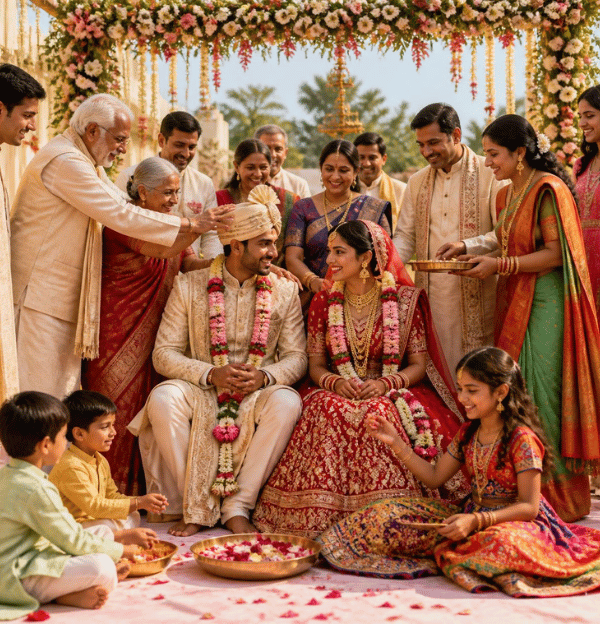
The choice of season for a wedding can affect the experience of the newly-wedded couples and the entire family and guests attending it. Although astrology and Muhurat play an essential role in the Gujarati wedding tradition, other factors such as the weather, ease of travel, and celebration of the event are taken into account when choosing the Best Time to Get Married.
Winter seems to be the most preferred season to have a wedding in Gujarat. The cool climate makes the ceremony, the reception, and the rituals comfortable. Guests will be able to attend longer ceremonies without having to struggle with the weather being too hot or rainy. In addition, wedding dresses, especially traditional Gujarati dresses with embroidery, are also easy to put on in cold weather.
Weddings in winter are very advantageous for photography and videography. The natural light will be softer; the decorations will not fade easily, and the venue will look brighter. In addition, couples may prefer garden weddings or venues that allow organizing bigger celebrations without any obstacles due to the weather.
Winter is not only enjoyable for comfort but has its own advantages as well. It is easy for family members to travel from other cities and countries, and ceremony managers find it easy to organize the wedding ceremony. Decorators, caterers, artists, and even photographers work best in a comfortable weather setting.
Some couples prefer the early spring season for their weddings because of the moderates weather condition and plenty of flowers available at that time. The use of fresh flowers adds great beauty to the Gujarat marriage customs and makes the wedding place look attractive as well.
Though summers are also possible, one needs to plan accordingly because of the hotter weather condition. Indoors weddings with cool indoor climate and shorter outdoor ceremonies make it easier for guests to attend the ceremony.
The monsoons bring some of their own issues. Rain may disrupt travel plans, the outdoors, and ease for the guests. But couples who like green foliage may decide to have indoor weddings in style in the monsoons while still getting wonderful pictures against the beauty of nature.
For NRIs, choosing the Best Time to Get Married involves both the weather as well as planning around their international vacations. A lot of families plan to conduct weddings during winter vacations, which helps NRIs to take part in weddings without disturbing their work and education.
After all, there is no one best time for everyone. The best time to get married must take into account culture, family availability, the weather, budgeting, and preferences.
Seasonal planning helps in having an organized wedding along with comfortable guests, beautiful pictures, and relaxed mood for starting your married life.

The couples of today manage the modern life with traditional Gujarati practices in deciding the Best Time to Get Married. While there is significance to the religion-based direction and auspicious Muhurat, there are other things such as career plans, advanced education, finances, travelling abroad, and so on that can affect their wedding plans. The ability to merge all these factors successfully gives them a harmonized wedding.
Career plans have become one of the most significant aspects in recent times. Couples usually like choosing a good wedding period so that there are no issues regarding the work. It means that the couple will be able to join their marriage ceremonies without any sort of tension.
Finances have become a very significant issue too. A wedding requires money for venues, catering, clothes, jewelry, photos, decoration, traveling, accommodation, entertainment, and many others. They must choose a wedding period when they can accumulate money, do comparison and make an accurate budget.
The availability of venues is also another important consideration. The popular banquet halls, resorts, and heritage venues get booked months in advance during the busy Gujarati weddings season. Early booking once the favorable date has been selected enables couples to book their preferred venue and make arrangements accordingly.
Modern technology has made wedding planning easier for couples. Astrologers can be consulted through video conferencing. Online booking of venue, sending invitation cards, holding family discussions and wedding planner applications come in handy during wedding planning, especially for families where members reside in other cities or even countries.
When it comes to wedding planning by NRI Gujarati families, it needs proper scheduling of international flights and other activities. Visa processing, airline schedule, vacation plans and even school holiday plans play a role in deciding the dates of wedding.
Physical and psychological well-being is also one of the considerations to take into account during the selection of wedding dates. Marriage is a partnership for life that requires maturity and responsibility. Couples should always be ready psychologically for marriage.
Modern couples also tend to favor intimate weddings rather than big weddings. Intimate weddings offer more flexibility regarding the Best Time to Get Married since they face less logistical complications without compromising tradition.
The environmental consciousness is yet another rising trend. Nowadays, many people opt for eco-friendly weddings by limiting the amount of waste, making use of environmentally friendly decorations, limiting food wastage, and hiring environmentally conscious suppliers. All of the aforementioned options can seamlessly fit into Gujarati wedding celebrations.
Finally, choosing the Best Time to Get Married means finding the balance between one’s religious views and the reality. Taking into consideration one’s career aspirations, financial maturity, family involvement, ease of travel, emotional maturity, and modern planning tools, one can organize his/her wedding in accordance with Gujarati traditions.
Planning helps ensure that the wedding is not only the wonderful celebration but also the confident start of the happy married life based on preparation and knowledge.
Offering Multilingual Choices
Offering Multilingual Choices
Offering Multilingual Choices
Offering Multilingual Choices
Choosing the Most Suitable Wedding Time does not simply mean picking a lucky day from the calendar. Effective wedding planning means striking the right balance between respecting Gujarati culture and making necessary arrangements, involving family, preparing financially, and being ready personally. Good planning will help avoid all kinds of stress and ensure that each ceremony goes off without a hitch. By taking into consideration various considerations ahead of time, one can have wonderful weddings that reflect cultural values and give an excellent start in marriage life. Below are some practical ideas.
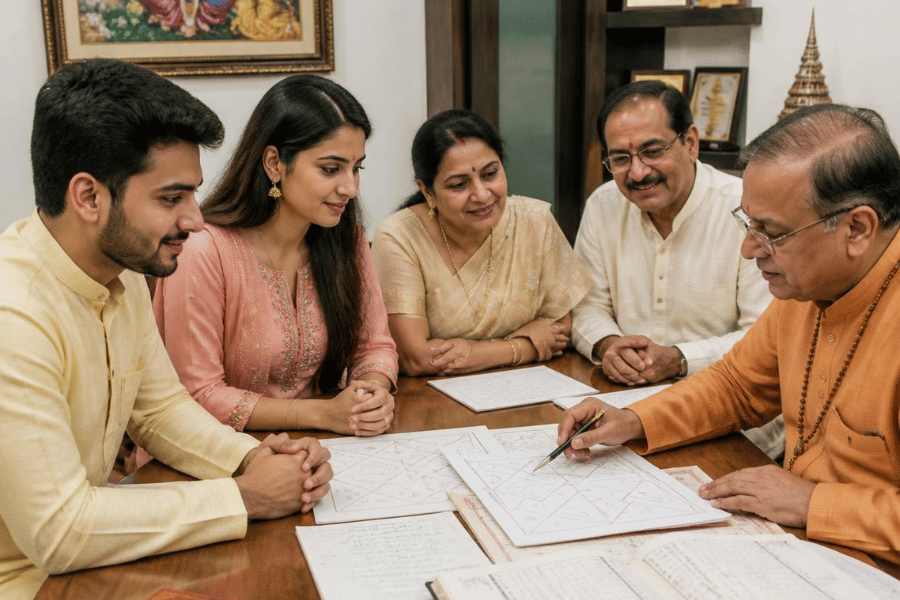
Gujarati families traditionally consult experienced astrologers before selecting a wedding date. Astrologers examine the Panchang, Nakshatra, Tithi, planetary positions, and the birth charts of both individuals to identify favorable Muhurat timings.
This consultation helps families choose dates believed to bring happiness, prosperity, and harmony into married life. Even modern couples often respect this tradition while balancing personal schedules and venue availability.
Combining astrological guidance with practical planning creates confidence and preserves cultural values throughout the wedding process.
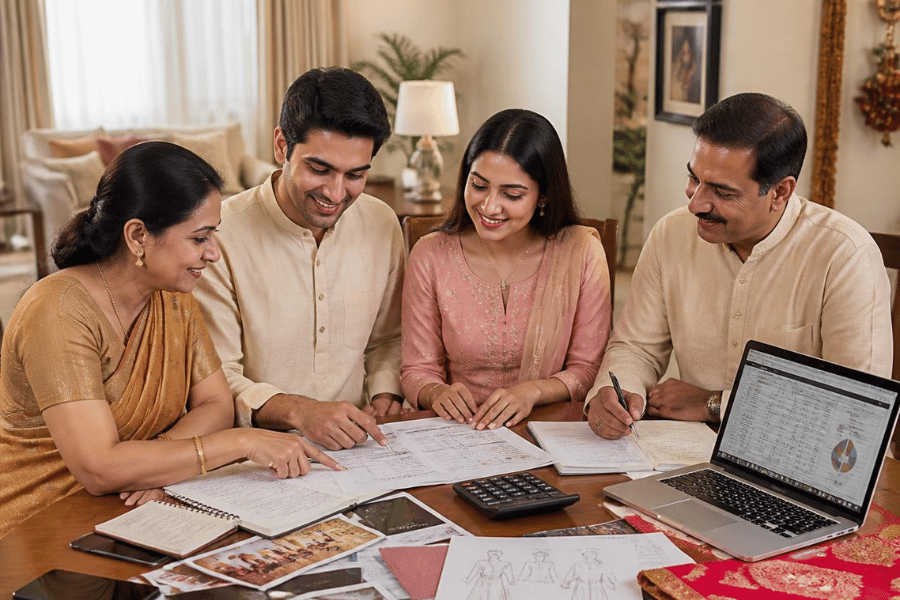
Financial preparation should begin several months before the wedding. Expenses including venue rental, catering, photography, decoration, jewelry, clothing, transportation, accommodation, and entertainment should all be carefully estimated.
Preparing a realistic budget prevents unnecessary financial pressure during wedding planning. Early budgeting also provides enough time to compare vendors and negotiate better pricing.
Proper financial planning supports a smooth wedding experience while allowing families to enjoy every celebration comfortably.
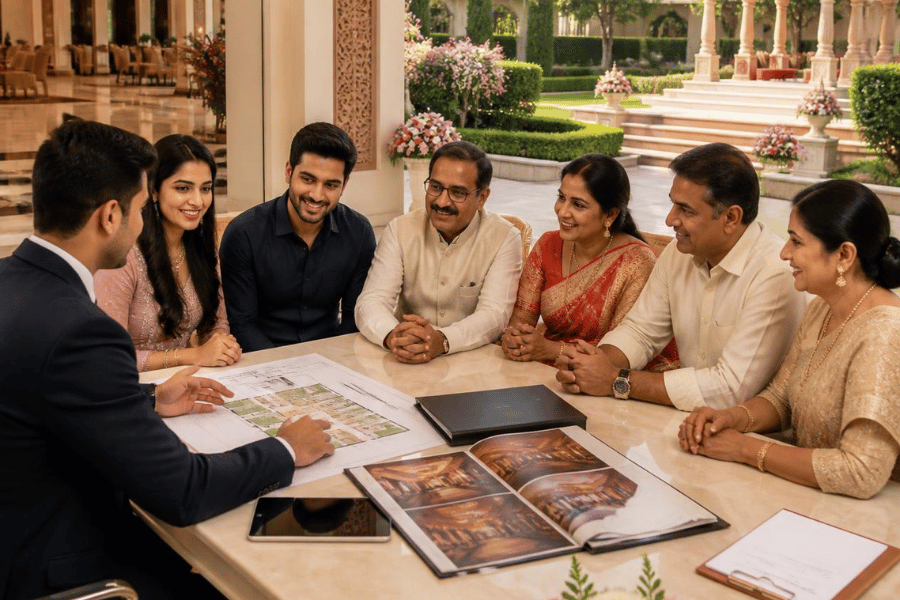
Popular wedding venues are often fully booked during peak Gujarati marriage seasons. Once the family selects an auspicious Muhurat, venue reservations should be completed as early as possible.
Early bookings provide greater flexibility in choosing preferred locations, decoration styles, seating arrangements, and guest capacities. Couples also avoid disappointment caused by limited venue availability.
Timely reservations contribute significantly to successful wedding organization.
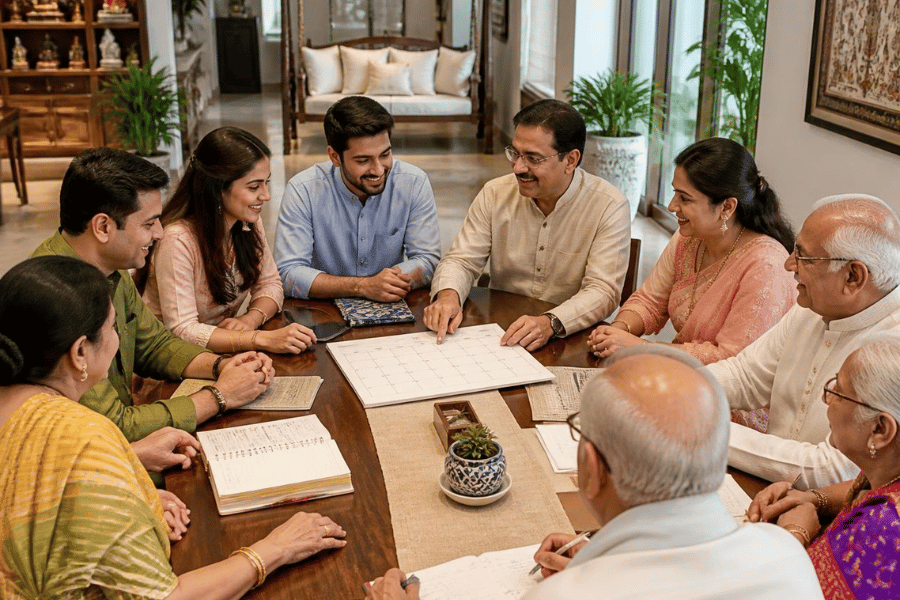
Gujarati weddings celebrate the union of two families rather than only two individuals. Therefore, coordinating the availability of close relatives is an essential part of planning.
Discuss travel arrangements, work commitments, school holidays, and international visits before finalizing dates. This ensures that important family members can participate in every major ceremony.
Strong family involvement creates lasting memories and strengthens emotional connections during the wedding celebration.
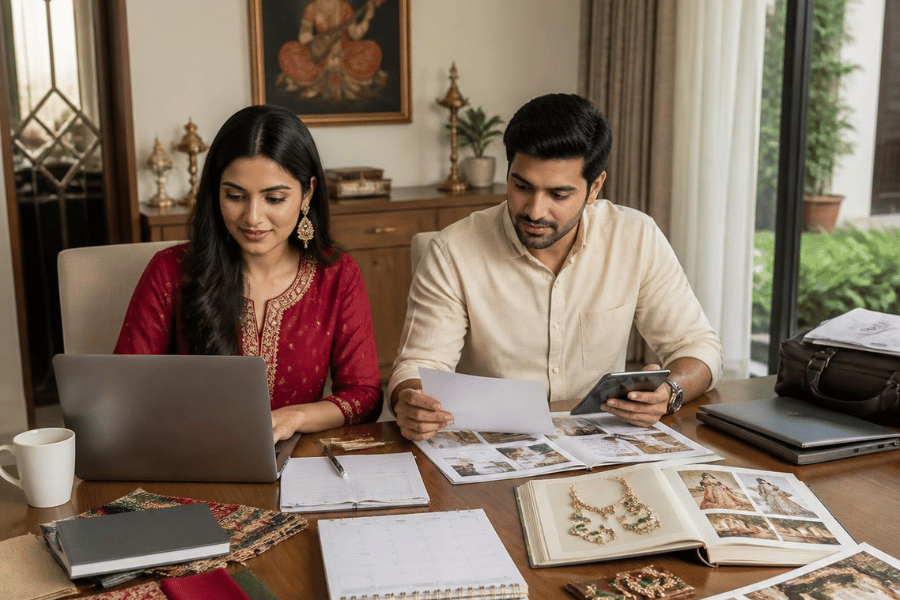
Modern couples often manage careers, businesses, or higher education while planning their marriage. Selecting suitable dates allows sufficient time for professional responsibilities and wedding preparations.
Respecting Gujarati traditions while considering personal schedules creates a balanced planning process. Couples can honor family customs without experiencing unnecessary stress or rushed decisions..
Practical flexibility supports both successful wedding arrangements and future married life.
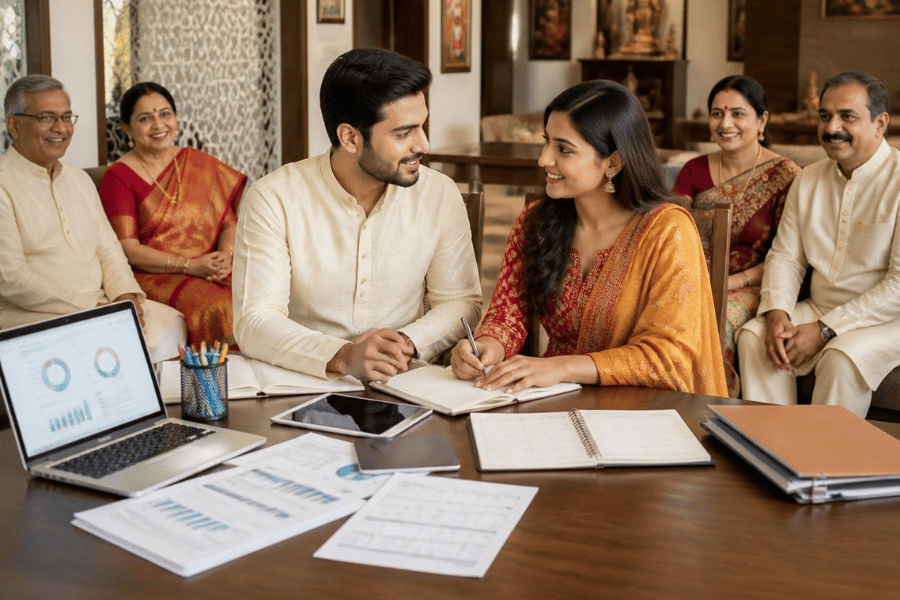
While choosing the Best Time to Get Married, couples should also prepare emotionally for married life. Discussions about financial planning, family expectations, career goals, communication styles, and future responsibilities are equally important.
A successful marriage depends on understanding, trust, patience, and mutual respect rather than only a favorable wedding date.
Preparing for life after the wedding builds a stronger relationship and supports long-term marital happiness.
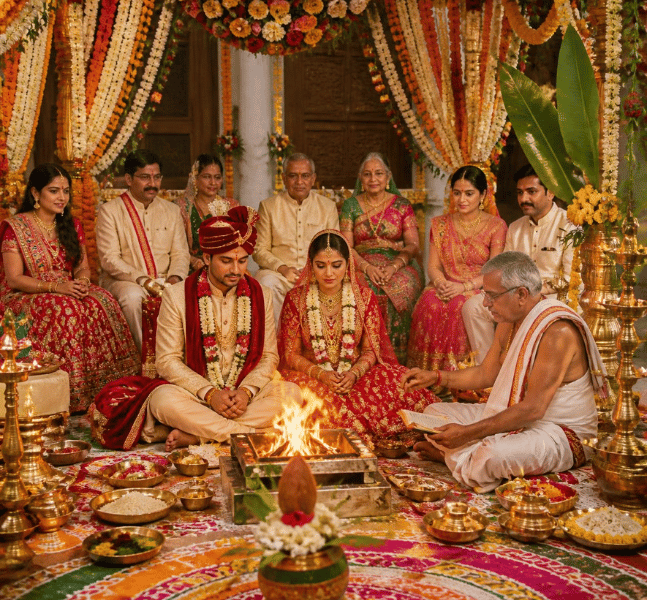
In the Gujarati culture, marriage is considered one of the most sacred events of a person’s life. Choosing the Best Time to Get Married is not only a result of religious faith but also the respect to the family traditions and spiritual values that have been passed on from generation to generation.
According to traditional views of the Gujarati people, starting a family during the period of auspicious Muhurat will bring good luck and happiness to the newlyweds, as well as help them build a prosperous and healthy family life. Astrologers examine Panchang, planetary positions, Nakshatra, Tithi and horoscopes of both individuals before recommending some suitable days for getting married. This can be viewed as a sign of a strong desire to give the best start to a new union.
The involvement of family members is yet another culturally valuable feature of the wedding preparations. Parents, grandmothers, grandfathers and other family elders take part in wedding preparations and help choose a suitable day and plan other wedding ceremonies. The respect to elderly members of the family is a key value in the Gujarati community.
The religious rituals conducted before and at the time of marriage add even more significance to culture. Some examples include Ganesh Sthapana, Grah Shanti, Pithi, Mehndi, Mandap Muhurat, and finally the actual wedding ritual, all conducted on auspicious dates. All these rituals carry blessings, purification, prosperity, and spirituality of marriage into the future.
Seasons also determine wedding traditions. Good weather means that the family gathering will be larger and decorations, food, music, dance, and other cultural performances can also be organized properly. The winter season weddings have gained popularity as they give favorable conditions to both the guests and organizers but retain all traditions.
Even for Indian families living overseas, culture remains a significant part of the tradition. It is important to note that although international flights and work commitments mean flexible dates for marriages, most NRI families prefer consulting astrologers and conducting weddings on good Muhurat dates if possible.
The Best Time to Get Married is another sign of optimism about the future. The marriage represents the start of a long-term union based on the principles of love, trust, responsibility, and respect between partners. The choice of an auspicious period reflects hopes that the couple will have a happy, wealthy, harmonious, and successful family life.
On the other hand, modern Gujarati couples tend to realize that compatibility, ability to communicate, emotional maturity, and common values are no less significant. They try to combine the observance of traditional rituals and the rational preparation for marriage.
Thus, the cultural significance of selecting the Best Time to Get Married consists in the fact that one should find the right balance between traditional culture and contemporary considerations. The combination of these two aspects provides people with the opportunity to respect their heritage, improve family relations, practice their religion, and happily start their married life.
Choosing the Best Time to Get Married requires balancing Gujarati traditions, family values, astrological guidance, financial planning, and modern lifestyle commitments. Every couple has unique priorities, but thoughtful preparation helps create a smooth wedding experience and a joyful beginning to married life. Instead of focusing only on a single auspicious date, families should evaluate multiple practical and cultural factors before making their final decision. The following expert guidelines explain how to choose the most suitable wedding period while respecting both traditional beliefs and contemporary responsibilities.

Gujarati weddings are deeply rooted in Hindu traditions, and understanding these customs helps families make informed decisions when selecting the Best Time to Get Married. Rituals such as Ganesh Sthapana, Grah Shanti, Mandap Muhurat, Pithi, and the wedding ceremony itself are performed according to auspicious timings determined through the Hindu Panchang. These ceremonies symbolize blessings, prosperity, purification, and spiritual preparation for married life.
Rather than selecting a date based only on convenience, families often consult experienced astrologers who analyze planetary positions, Nakshatra, Tithi, and Lagna. These calculations are believed to identify favorable moments that support happiness, harmony, and long-lasting relationships.
Learning the significance of these traditions allows couples to appreciate the cultural meaning behind every ceremony instead of treating them as formalities. Even modern Gujarati families living abroad continue to respect these customs while adapting them to contemporary schedules.
By understanding religious traditions before confirming wedding dates, couples begin their married journey with confidence, family support, and respect for their cultural heritage, making the celebration both meaningful and spiritually significant.

Astrology plays an important role in Gujarati wedding planning, but practical considerations should receive equal attention. Choosing the Best Time to Get Married involves balancing auspicious Muhurat with venue availability, financial readiness, travel arrangements, and family schedules.
Once astrologers recommend suitable dates, families should compare them with practical commitments. Booking venues, photographers, decorators, caterers, and accommodation becomes easier when planning begins several months in advance. Early preparation also provides greater flexibility and helps avoid unnecessary stress.
Couples should consider work responsibilities, examinations, business obligations, and international travel while selecting wedding dates. A perfectly auspicious Muhurat may become difficult if important family members cannot attend or if essential wedding services are unavailable.
Combining astrology with organized planning respects Gujarati traditions while ensuring the celebration proceeds smoothly. This balanced approach allows couples to honor cultural beliefs without ignoring practical realities, resulting in a memorable and well-coordinated wedding.

Seasonal planning greatly influences the success of Gujarati weddings. While astrology determines auspicious dates, weather affects guest comfort, travel convenience, decoration quality, photography, and event management. Therefore, selecting the Best Time to Get Married should include careful consideration of seasonal conditions.
Winter remains the preferred wedding season for many Gujarati families because pleasant temperatures create comfortable conditions for long ceremonies and outdoor celebrations. Guests enjoy traditional attire without discomfort, while photographers capture beautiful natural lighting throughout the day.
Families choosing spring weddings also benefit from moderate weather and attractive floral decorations. Summer weddings require additional arrangements such as air-conditioned venues and hydration facilities, whereas monsoon weddings demand indoor planning because rainfall may disrupt transportation and outdoor events.
Selecting the right season improves overall wedding experiences for everyone involved. Comfortable guests participate more actively in celebrations, travel becomes easier, and event organizers work more efficiently. Seasonal planning therefore complements religious traditions while ensuring practical success.

Financial readiness is one of the most important factors when selecting the Best Time to Get Married. Weddings involve numerous expenses, including venue reservations, catering, clothing, jewelry, decorations, invitations, photography, entertainment, accommodation, transportation, and religious ceremonies.
Couples should prepare a detailed budget before confirming wedding dates. Early planning allows sufficient time to compare vendors, negotiate better prices, and avoid unnecessary financial pressure. It also provides opportunities to prioritize essential services while controlling overall expenses.
Families should avoid selecting dates simply because they are popular if financial preparation is incomplete. A well-organized wedding within budget creates far more happiness than an extravagant celebration that causes financial stress after marriage.
Financial planning also supports smoother coordination between both families, allowing everyone to focus on celebrating rather than managing unexpected costs. Responsible budgeting creates a confident beginning to married life while preserving long-term financial stability.

Gujarati weddings celebrate the union of two families, making family participation an essential consideration when choosing the Best Time to Get Married. Parents, grandparents, siblings, relatives, and close friends all contribute emotionally and practically to wedding preparations.
Before confirming dates, families should discuss travel plans, work schedules, school holidays, and international visits. Many Gujarati families have relatives living abroad, making early coordination especially important. Selecting dates that allow maximum participation strengthens family relationships and creates lifelong memories.
Family involvement extends beyond attendance. Elders often guide traditional ceremonies, cultural rituals, and important wedding decisions based on their experience. Their presence preserves traditions while offering emotional support to the couple.
Choosing wedding dates that accommodate family availability reflects Gujarati values of togetherness, respect, and shared celebration. Strong family participation transforms weddings into meaningful cultural events that unite generations.

While selecting the Best Time to Get Married is important, couples should remember that marriage itself is far more significant than the wedding day. A beautiful ceremony creates lasting memories, but lifelong happiness depends on communication, trust, respect, patience, emotional maturity, and shared goals.
Before marriage, couples should openly discuss financial planning, career aspirations, family responsibilities, living arrangements, future children, and lifestyle expectations. Honest conversations create stronger understanding and reduce misunderstandings after marriage.
Wedding planning should therefore include emotional preparation alongside traditional rituals and practical arrangements. Families can support couples by encouraging meaningful discussions rather than focusing only on event management.
Ultimately, the most successful marriages begin not only with an auspicious Muhurat but also with mutual understanding and commitment. When couples prepare themselves emotionally while respecting Gujarati traditions, they create a strong foundation for a joyful, stable, and fulfilling married life that continues long after the wedding celebrations have ended.
With 140+ branches across USA, largest network of its kind
An auspicious Muhurat is believed to bring positivity, prosperity, peace, and long-term happiness to married life. Gujarati families traditionally consult astrologers who study the Panchang, Nakshatra, Tithi, and planetary positions before recommending wedding dates. While compatibility and mutual understanding remain essential, selecting the Best Time to Get Married according to religious traditions provides families with confidence and preserves valuable cultural practices that have been followed for generations.
Winter is widely considered the Best Time to Get Married in Gujarati culture because of its pleasant weather, comfortable travel conditions, and suitability for outdoor ceremonies. Guests enjoy celebrations more comfortably, photographers capture beautiful natural lighting, and elaborate traditional attire becomes easier to wear. Although weddings can take place during other seasons, winter usually provides the most practical and enjoyable experience for families and guests alike.
Many modern Gujarati couples continue consulting astrologers while balancing practical considerations such as careers, travel, and venue availability. Astrology helps identify auspicious Muhurat timings, while personal readiness and compatibility remain equally important. Combining traditional guidance with modern planning allows couples to respect family customs without compromising practical responsibilities when choosing the Best Time to Get Married.
NRI families often coordinate international travel schedules, visa processing, work vacations, and school holidays alongside traditional Muhurat dates. Early planning allows relatives from different countries to attend important ceremonies comfortably. Choosing the Best Time to Get Married for NRI families requires balancing religious traditions with practical travel arrangements to maximize family participation and reduce unnecessary stress during wedding preparations.
Wedding expenses include venues, catering, photography, decorations, attire, jewelry, transportation, and accommodation. Preparing a realistic budget before confirming wedding dates helps families avoid financial pressure and organize celebrations more efficiently. Financial readiness ensures couples enjoy the wedding without unnecessary stress while beginning married life with greater stability. Careful budgeting complements selecting the Best Time to Get Married successfully.
Gujarati weddings celebrate the union of two families rather than only two individuals. Selecting dates that allow parents, grandparents, relatives, and friends to attend strengthens emotional bonds and preserves cultural traditions. Early discussions regarding travel, work commitments, and international schedules help maximize participation. Family involvement makes choosing the Best Time to Get Married more meaningful and memorable for everyone.
Popular wedding venues are often booked several months in advance, especially during peak Gujarati wedding seasons. After confirming an auspicious Muhurat, families should immediately reserve their preferred venue to avoid limited availability. Early bookings provide better location choices, flexible decoration options, and smoother wedding planning. Timely venue reservations support a stress-free celebration during the Best Time to Get Married.
Yes. Weather affects guest comfort, travel convenience, outdoor ceremonies, photography, catering, and event management. Winter weddings are generally preferred because pleasant temperatures create ideal conditions for celebrations. Families planning weddings during summer or monsoon seasons should make additional arrangements for guest comfort. Considering seasonal conditions helps couples choose the Best Time to Get Married while ensuring smooth wedding celebrations.
Marriage is a lifelong commitment that requires trust, communication, patience, and mutual understanding. Couples should discuss financial planning, future goals, family expectations, and responsibilities before finalizing wedding dates. Emotional maturity creates stronger relationships and supports successful married life beyond the wedding ceremony. Selecting the Best Time to Get Married should always include emotional preparedness alongside traditional customs.
Couples can respect Gujarati customs by consulting astrologers, following important rituals, and involving family members while also considering careers, finances, travel schedules, and personal goals. Combining traditional beliefs with organized planning creates meaningful celebrations without unnecessary pressure. This balanced approach helps couples confidently choose the Best Time to Get Married while honoring both cultural heritage and contemporary lifestyles.
Budget Planning for a Gujarati Wedding
Stay ahead of the curve! Subscribe for the latest updates, exclusive.
Copyright © 2025 Gujarati Soulmate.