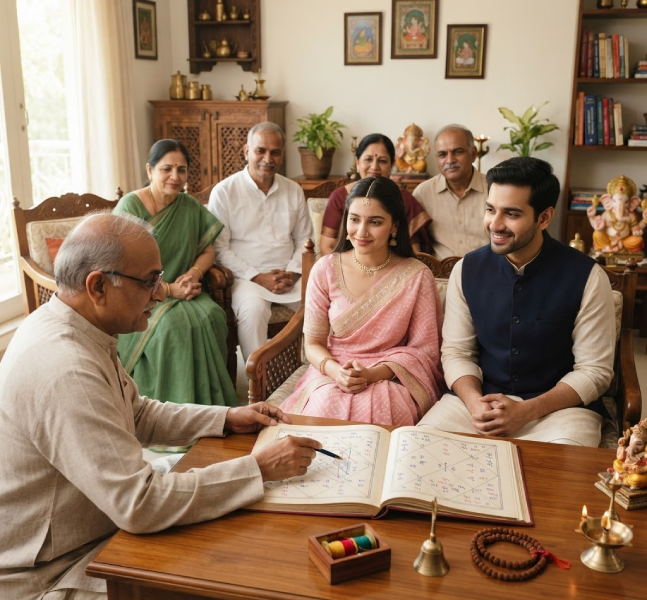
Horoscope Matching has always been an essential part of Gujarati matrimonial tradition for decades. Prior to accepting any marriage proposal, many parents prefer consulting with experienced astrologers to match the horoscopes of both the potential wife and husband. The procedure, often called Kundli Milan or horoscope matching, is considered capable of revealing compatibility between the couple before they enter into married life. Despite the fact that modern marriages have become more about communication and understanding than ever, Horoscope Matching still plays an important role in many Gujarati families.
There are several important aspects of horoscopes which are usually taken into consideration by astrologers, such as planetary placements, Nakshatra, Lagna, Guna Milan, and Doshas. These aspects are carefully analyzed by astrologers in order to reveal compatibility of the couple in areas such as emotional, health, financial, and family matters. The goal of this practice is not to foretell future events but to recognize potential strengths and problems.
The culture of Gujarati society holds marriage as a sacred alliance not between the individuals but the families themselves. This is why Horoscope Matching is usually seen as seeking blessings so that the couple starts their journey under auspicious signs. People feel that by knowing their astrological compatibility, there will be more chances for respect and good communication and ultimately a happy married life.
Today, when it comes to making decisions regarding Horoscope Matching, it always accompanies practical aspects like education, career, personal qualities, and values. People usually take astrology as one of the deciding factors, not the only one.
The NRI Gujarati families have not forgotten the culture even though they stay in other countries too. The online consultation as well as horoscope matching has helped the families living all over the world to maintain their culture despite their contemporary lifestyle.
The knowledge of Horoscope Matching helps couples know how important the process is from the point of view of culture although they must realize that a marriage succeeds only through trust, love, commitment, and respect between the two.
Horoscope Matching is also important in Gujarati marriages as it is a practice that is both religiously and traditionally followed as well as a step to prepare oneself before getting into marriage. Families feel that comparing the horoscopes of the two individuals gives them an idea about their compatibility and what all can work for and against them in the marriage.
While matching the horoscopes, astrologers check for several things like Guna Milan, Nakshatra, planets’ position, Lagna, and any Dosha. It is believed that each of these factors impacts certain areas of one’s married life such as understanding between the partners, relationship with their family members, money, health, and relationships as well.
Culture of Gujaratis attaches great significance to the continuation of traditions when making decisions of life. The practice of Horoscope Matching is an example of this cultural tradition whereby people think carefully before entering into a life-long relationship. Often parents and older people participate in this process to make sure that the two families agree with the union.
Today’s generation knows the significance of balancing astrology with other important elements. Things like education, communication, values, career goals, emotional maturity, and respect are equally significant for developing a successful relationship. That is why many couples consider Horoscope Matching as one of the factors affecting their decision.
Because of technological advancements, horoscope matching can be done online in such a way that makes it easier for those families who live in other cities or even other countries.
In conclusion, Horoscope Matching will always remain relevant because it is a combination of culture, involvement of the entire family, divine intervention, and wise preparation for an important event in one’s life.
As part of the Horoscope Matching process, astrologers assess different key astrological factors before advising on the compatibility of the marriage. This practice has been in existence among Gujarati communities for many years and is thought to give good insight into emotional compatibility, family ties, finances, good health, and marriage happiness. Though modern couples consider communication and understanding to be key considerations, these ancient astrological rules still hold significant importance for many Gujarati families. The knowledge of these key factors will help couples understand the significance of Horoscope Matching.

The Guna Milan system is one of the most important parts of Horoscope Matching. It compares the birth charts of the bride and groom using the traditional Ashtakoot method, which evaluates eight different compatibility factors.
Each factor contributes specific points toward a total compatibility score. A higher score generally indicates stronger compatibility according to traditional astrology. These factors evaluate personality, emotional understanding, health, prosperity, family harmony, and relationship stability.
Although Guna Milan is highly respected, experienced astrologers also examine additional factors before giving final guidance.

Nakshatra compatibility focuses on the birth stars of both individuals. Every person is born under a particular Nakshatra, and astrologers analyze how these stars interact with one another.
The relationship between Nakshatras is believed to influence emotional compatibility, communication, mutual respect, and long-term harmony. Favorable combinations are traditionally considered beneficial for maintaining balanced married life.
Nakshatra analysis forms an essential component of comprehensive Horoscope Matching in Gujarati marriages.

Astrologers carefully study the positions of important planets in both birth charts during Horoscope Matching.
Planets such as Jupiter, Venus, Mars, Moon, Saturn, and Mercury are believed to influence different aspects of life, including relationships, career, health, financial stability, and emotional behavior.
Understanding planetary influences helps astrologers identify strengths and possible challenges that may affect married life while offering suitable guidance.

Mangal Dosha is another important consideration during Horoscope Matching. It relates to the placement of Mars in specific houses of the birth chart.
Traditional astrology believes that certain Mars placements may influence marital harmony if not properly balanced. Astrologers carefully evaluate both charts before reaching conclusions rather than making assumptions based only on Mangal Dosha.
Proper analysis provides balanced guidance instead of unnecessary concern.

Lagna, or the ascendant sign at birth, plays an important role in personality analysis during Horoscope Matching.
The ascendant reflects temperament, behavior, decision-making, physical characteristics, and general outlook toward life. Comparing both ascendants helps astrologers understand compatibility between the couple’s personalities.
Lagna compatibility supports deeper analysis beyond basic Guna matching.

Experienced astrologers never depend on a single factor while performing Horoscope Matching.
Instead, they study the complete birth charts by combining Guna Milan, Nakshatra, planetary positions, Doshas, Lagna, and other astrological influences. This comprehensive evaluation provides more balanced guidance for families.
Looking at the overall horoscope ensures that compatibility decisions are based on complete analysis rather than isolated factors.
Many Gujarati families follow traditional beliefs regarding Horoscope Matching before marriage. While these beliefs have deep cultural and religious significance, understanding their purpose helps couples appreciate astrology without misunderstanding its role in building successful lifelong relationships.
One common belief is that Horoscope Matching helps identify couples who are naturally compatible in important areas of married life. Astrologers study emotional compatibility, communication patterns, family harmony, health, financial stability, and overall relationship potential. Families believe this guidance encourages thoughtful marriage decisions rather than relying only on external qualities. Although astrology offers valuable insights, successful marriages still require trust, understanding, respect, and continuous effort from both partners.
Many people mistakenly believe that a high Guna score guarantees a perfect marriage. In reality, experienced astrologers explain that Guna Milan represents only one part of Horoscope Matching. Personal values, communication, emotional maturity, shared goals, and mutual respect remain equally important. A favorable horoscope supports compatibility, but long-term happiness depends on the couple’s daily commitment to each other.
Mangal Dosha often creates unnecessary fear because of widespread misconceptions. Professional astrologers examine the complete birth charts before determining whether Mangal Dosha actually affects marital compatibility. Many factors can reduce or balance its influence. Families should seek guidance from knowledgeable astrologers instead of making decisions based solely on incomplete information or popular myths.
Traditional Gujarati astrology emphasizes complete horoscope analysis rather than focusing on one isolated factor. Astrologers combine Guna Milan, Nakshatra compatibility, planetary positions, Lagna, Doshas, and overall chart balance before offering recommendations. This comprehensive approach provides more accurate guidance and helps families make balanced decisions while respecting traditional beliefs.
Modern Gujarati families increasingly believe that Horoscope Matching should complement personal compatibility rather than replace it. Education, career goals, emotional maturity, communication skills, shared values, and mutual respect remain essential for successful marriages. Combining traditional astrology with practical compatibility creates balanced decision-making that respects both cultural heritage and modern relationships.
Gujarati marriages traditionally involve strong family participation throughout the matchmaking process. Parents and elders often help arrange Horoscope Matching because they wish to ensure both families begin the relationship with confidence and mutual understanding. Their experience, cultural knowledge, and emotional support strengthen marriage preparation while preserving valuable traditions that continue across generations.
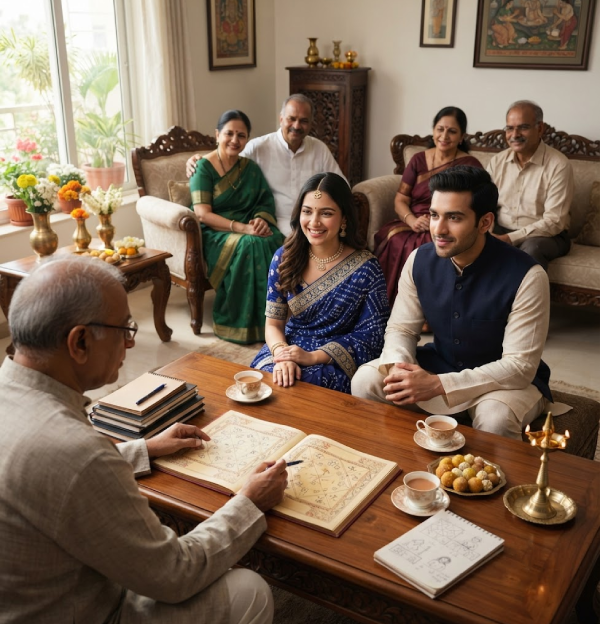
Horoscope Matching offers several benefits that go beyond simply comparing astrological charts. In Gujarati culture, it serves as a thoughtful process that encourages families and couples to evaluate compatibility before beginning married life. While astrology should never replace trust, communication, or mutual understanding, it provides an additional perspective that many families find valuable during marriage planning.
One of the primary benefits of Horoscope Matching is that it promotes careful decision-making. Marriage is a lifelong commitment, and families prefer to examine every important aspect before finalizing the relationship. Astrological analysis encourages couples to consider emotional compatibility, family harmony, financial stability, health, and future responsibilities in a structured manner.
Another advantage is that Horoscope Matching creates meaningful conversations between both families. During the consultation process, parents, elders, and the couple often discuss expectations, traditions, values, and long-term goals. These discussions strengthen understanding and help both families develop confidence in the relationship before marriage.
Horoscope Matching also helps identify possible areas where the couple may need greater understanding or patience. Rather than predicting failure, experienced astrologers use horoscope analysis to highlight strengths as well as challenges. This allows couples to prepare themselves mentally and emotionally while approaching married life with realistic expectations.
For many Gujarati families, the process also provides spiritual reassurance. Following traditional customs creates a sense of confidence because families believe they have respected religious guidance before making an important life decision. This emotional comfort often reduces anxiety surrounding marriage arrangements.
Modern couples increasingly combine Horoscope Matching with practical compatibility. Education, personality, communication, career aspirations, financial planning, emotional maturity, and shared values remain equally important. Astrology becomes one helpful tool rather than the only deciding factor.
Technology has further simplified the process. Today, families can consult qualified astrologers online, exchange birth details digitally, and receive detailed compatibility reports without geographical limitations. This convenience helps preserve Gujarati traditions even among families living abroad.

As society continues to evolve, the role of Horoscope Matching in Gujarati marriages has also changed. While traditional astrology remains respected by many families, modern couples increasingly view horoscope analysis as one part of a much broader compatibility assessment. Education, emotional intelligence, communication, personal values, career aspirations, and mutual respect now receive equal importance alongside astrological guidance.
Today’s couples often spend time understanding each other’s personalities before marriage. They discuss future goals, financial planning, career ambitions, family expectations, lifestyle preferences, and long-term responsibilities. These conversations create strong emotional foundations that complement traditional Horoscope Matching rather than replacing it.
Many Gujarati families have successfully adopted this balanced approach. Instead of depending solely on astrological scores, they use horoscope analysis as supportive guidance while encouraging the couple to build genuine understanding through regular communication. This combination allows traditional beliefs and modern thinking to work together harmoniously.
Technology has made Horoscope Matching much more accessible than ever before. Professional astrologers now offer online consultations, digital birth chart analysis, and video discussions for families living across different countries. This has become especially valuable for NRI Gujarati families who wish to preserve cultural traditions while living abroad.
Modern astrologers also emphasize that Horoscope Matching should never create unnecessary fear or misunderstandings. A slightly lower compatibility score does not automatically indicate an unsuccessful marriage. Experienced professionals study the complete horoscope before offering recommendations and often explain that many other positive factors can balance minor astrological differences.
Young couples today also recognize the importance of emotional compatibility. Trust, honesty, kindness, patience, respect, and willingness to resolve disagreements peacefully contribute far more to marital happiness than horoscope scores alone. Healthy communication helps couples overcome challenges regardless of astrological combinations.
Family involvement continues to remain valuable in Gujarati marriages. Parents and elders provide guidance based on experience while allowing the couple to participate actively in important decisions. This cooperative approach strengthens family relationships and helps both generations understand each other’s perspectives.
Another modern trend is using Horoscope Matching as a conversation starter rather than a final judgment. Couples often discuss compatibility reports together, using them to understand personal strengths, communication styles, and relationship expectations more deeply. This positive approach transforms astrology into a tool for self-awareness instead of simply evaluating marriage suitability.
Offering Multilingual Choices
Offering Multilingual Choices
Offering Multilingual Choices
Offering Multilingual Choices
A successful Horoscope Matching procedure not only entails the matching of the birth chart of two individuals. It is imperative that one should be open-minded regarding astrology, consult experts, and strike a proper balance between traditions and practicality. Openness in communication, birth facts, emotional maturity, and familial cooperation all add up to making wiser marriage decisions. If one uses astrology correctly along with understanding and commonality of values, it will become a very useful tool in preparing oneself for marriage. The following are some practical steps which would be helpful.
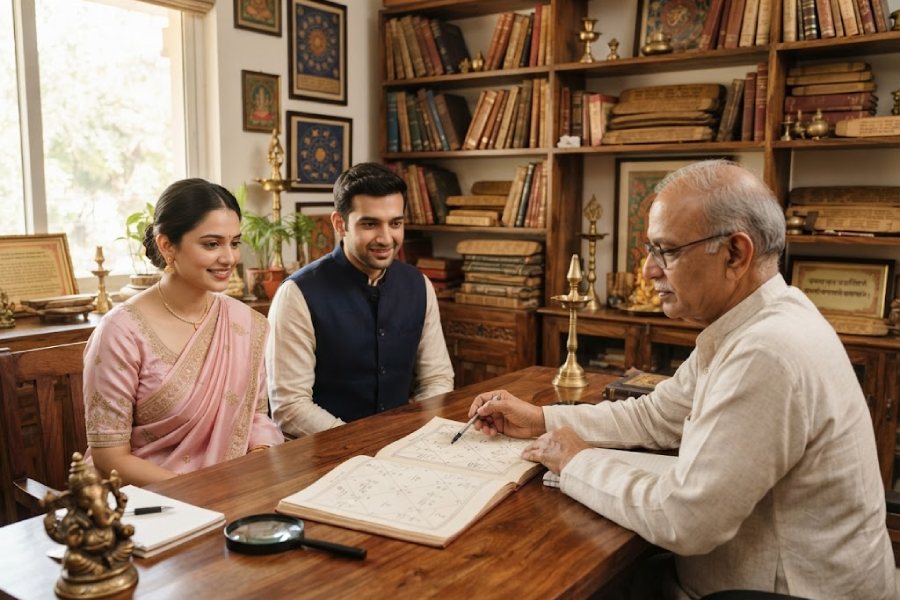
The quality of Horoscope Matching depends greatly on the knowledge and experience of the astrologer. Qualified Vedic astrologers carefully analyze complete birth charts instead of focusing on only one compatibility score.
They explain planetary influences, Guna Milan, Doshas, Nakshatra compatibility, and overall relationship potential with balanced guidance. Professional astrologers also answer questions clearly and avoid creating unnecessary fear.
Consulting experienced experts helps families make informed decisions while respecting Gujarati traditions and maintaining confidence throughout the marriage planning process.
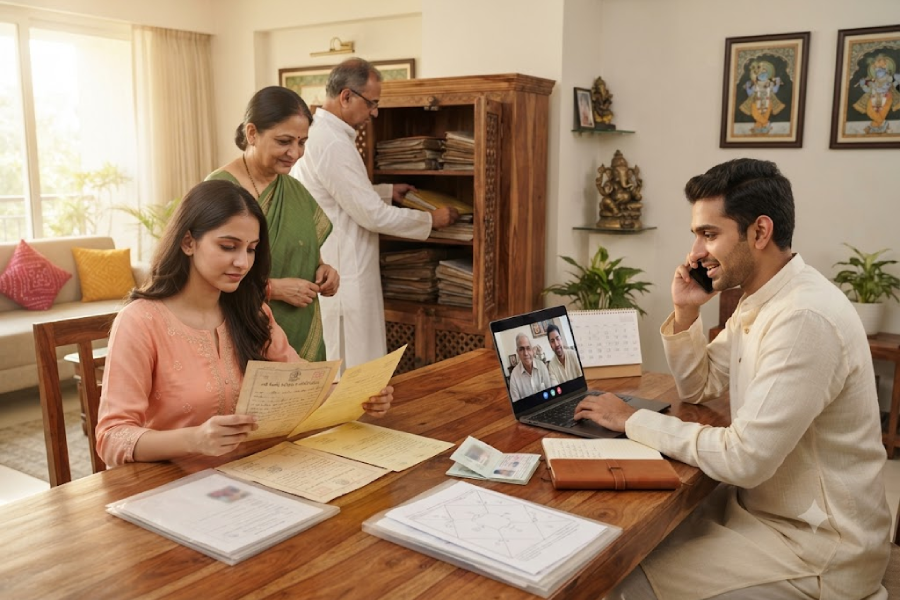
Accurate Horoscope Matching requires correct birth details for both individuals. Date of birth, exact birth time, and birthplace all influence horoscope calculations.
Even small errors in birth information may affect planetary positions, ascendant calculations, Nakshatra identification, and compatibility analysis. Families should verify these details before consulting an astrologer.
Providing complete and accurate information ensures more reliable horoscope interpretations and supports meaningful guidance during marriage discussions.
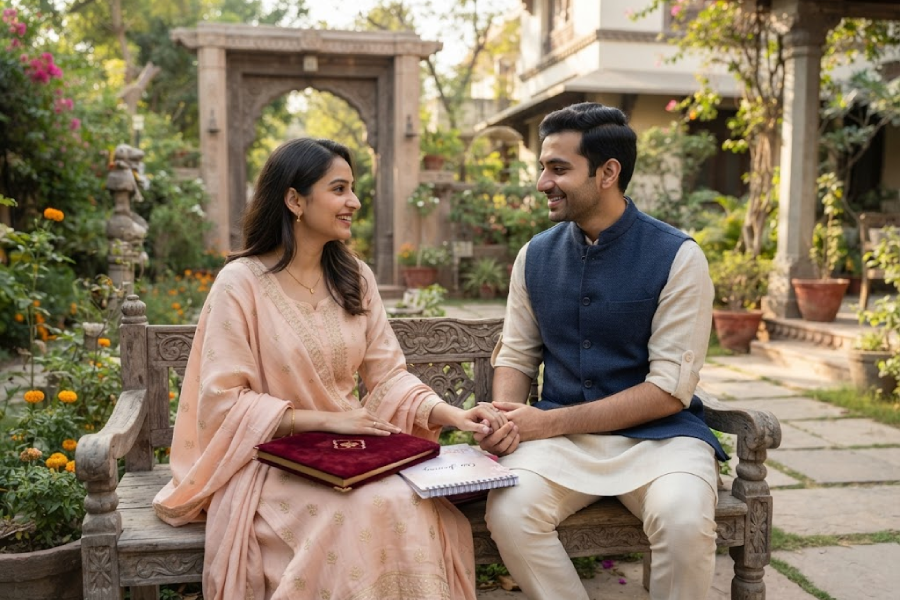
Horoscope Matching should complement—not replace—personal compatibility. Couples should spend time understanding each other’s personalities, communication styles, values, career aspirations, and family expectations.
Strong emotional understanding often contributes more to long-term marital success than astrology alone. Honest discussions help couples build trust before marriage while respecting traditional guidance.
Combining astrological insights with practical compatibility creates balanced decision-making that benefits both individuals and their families.
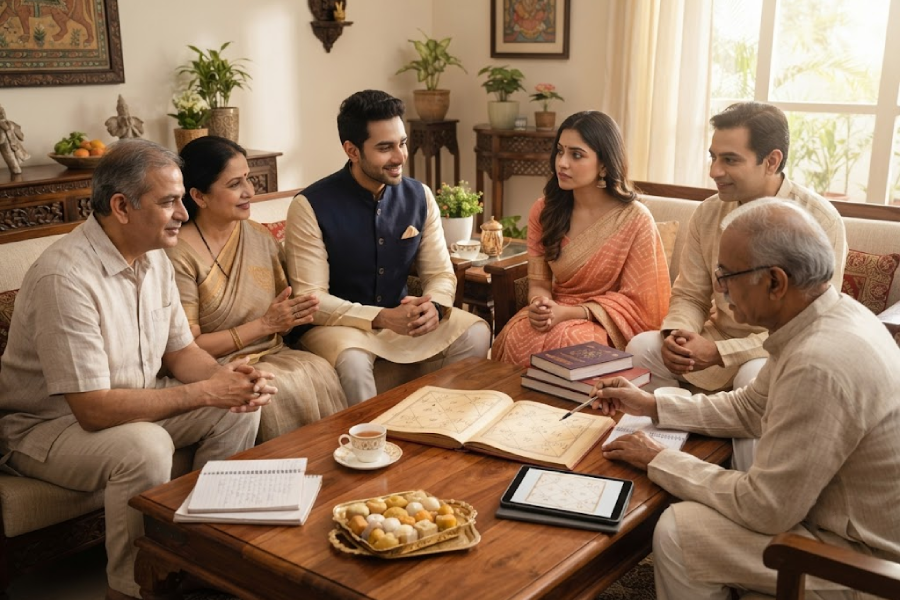
Open communication prevents misunderstandings during the Horoscope Matching process. Families should discuss the astrologer’s observations respectfully while allowing both individuals to understand the findings.
If certain challenges are identified, they should be viewed as guidance rather than reasons for immediate concern. Mature conversations encourage practical solutions instead of unnecessary anxiety.
Transparent discussions strengthen trust between both families before marriage preparations officially begin.
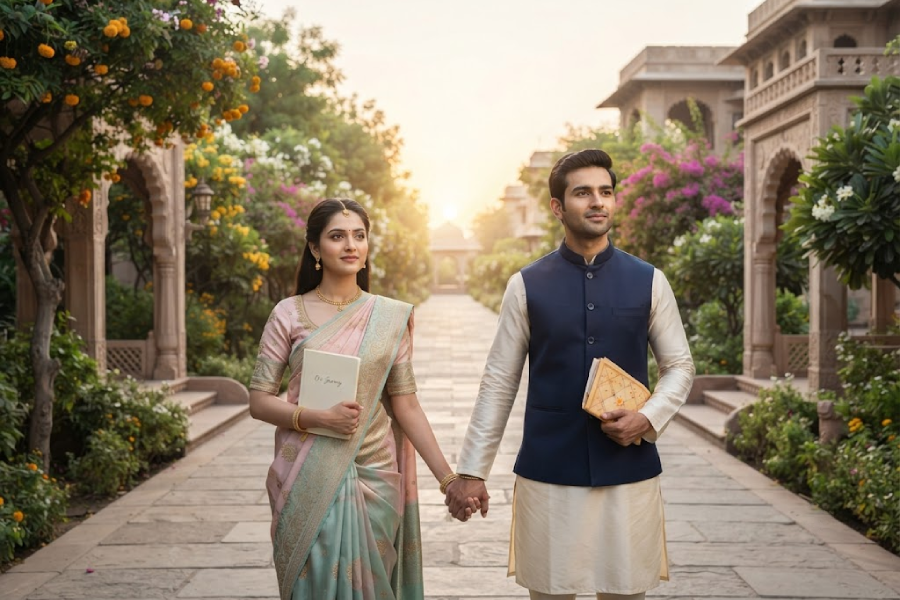
One common misconception is that Horoscope Matching predicts every future event with certainty. In reality, astrology offers guidance based on traditional interpretations rather than guaranteed outcomes.
Successful marriages depend on communication, respect, patience, compromise, and emotional maturity. Horoscope analysis helps families prepare thoughtfully but cannot replace personal responsibility.
Understanding astrology realistically allows couples to appreciate its value while maintaining practical expectations.
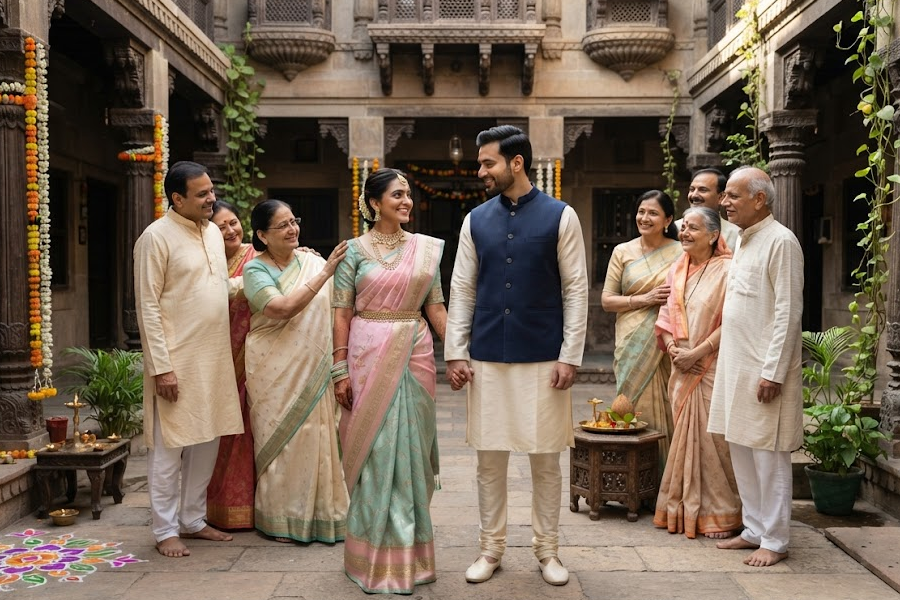
Gujarati traditions encourage respecting astrology, family guidance, and cultural customs before marriage. However, couples should also consider personal compatibility, emotional readiness, education, and future goals.
A balanced approach allows families to preserve heritage while supporting thoughtful modern decision-making. Both tradition and practical understanding contribute to stronger relationships.
Respecting culture while making informed choices helps couples begin married life with confidence, harmony, and mutual trust.
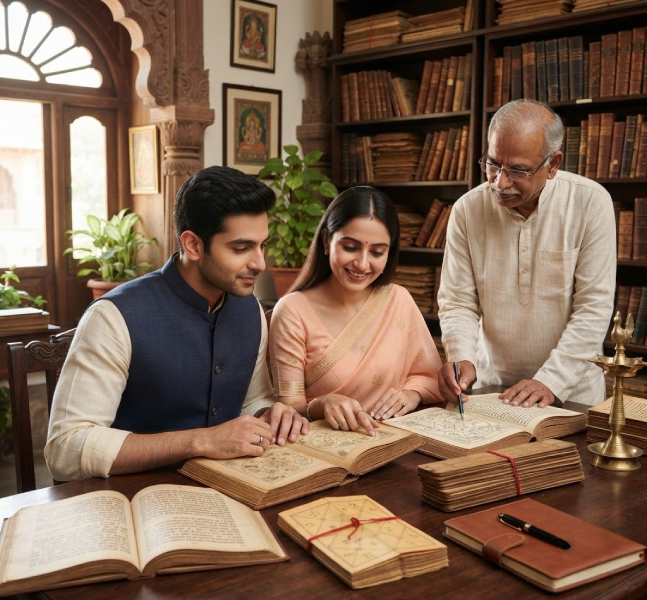
Despite its long history in Gujarati culture, Horoscope Matching is often misunderstood. Many misconceptions have developed over time because of incomplete information, popular myths, or exaggerated beliefs. Understanding the true purpose of horoscope analysis helps couples and families approach the process with greater confidence and realistic expectations.
One common misconception is that Horoscope Matching alone determines whether a marriage will succeed or fail. In reality, astrology is only one factor considered before marriage. Communication, trust, emotional maturity, shared values, financial responsibility, and mutual respect remain equally important. Even highly compatible horoscopes cannot guarantee lifelong happiness without continuous effort from both partners.
Another misunderstanding involves Guna Milan scores. Many people believe that only very high scores lead to successful marriages. Experienced astrologers, however, examine the complete birth charts rather than relying solely on numerical compatibility. Planetary positions, Doshas, Nakshatra relationships, Lagna, and several additional astrological elements are evaluated together before any recommendation is given.
Mangal Dosha also creates unnecessary fear among many families. Some assume that the presence of Mangal Dosha automatically prevents successful marriage. Professional astrologers understand that numerous planetary combinations may reduce or balance its effects. Therefore, decisions should never be based solely on one astrological factor without comprehensive analysis.
Another misconception is that Horoscope Matching ignores personal choice. Modern Gujarati families increasingly recognize that astrology should support—not replace—the couple’s own understanding and compatibility. Couples are encouraged to communicate openly, understand each other’s expectations, and participate actively in marriage decisions alongside traditional guidance.
Some people also believe online Horoscope Matching reports are always completely accurate. While technology provides convenience, automated reports cannot replace personalized interpretation by an experienced Vedic astrologer. Professional consultations help families understand complex astrological relationships rather than depending only on computer-generated scores.
Making marriage decisions based on Horoscope Matching requires balance, knowledge, and practical thinking. While astrology has an important place in Gujarati traditions, it should be combined with emotional compatibility, mutual respect, and family understanding. Couples who approach Horoscope Matching with realistic expectations are more likely to make confident and informed decisions. The following expert recommendations explain how families can use horoscope analysis wisely while preparing for a successful and fulfilling married life.
Before making marriage decisions, couples and families should understand how Horoscope Matching is actually performed. Many people believe the process only involves comparing Guna scores, but experienced Vedic astrologers evaluate much more than that. They carefully analyze birth charts, Nakshatra compatibility, planetary positions, ascendant signs, Doshas, planetary strengths, and other important astrological combinations.
Understanding the complete process helps families appreciate why horoscope analysis takes time and expertise. Rather than accepting conclusions without explanation, couples should ask questions and understand the reasoning behind the astrologer’s observations. This creates transparency and allows both families to participate confidently in the decision-making process.
Learning about Horoscope Matching also reduces unnecessary anxiety created by myths or incomplete information found online. Couples become more aware that astrology provides guidance rather than absolute predictions. When families understand how compatibility is assessed, they can combine traditional knowledge with practical thinking, making the entire marriage planning journey more meaningful and balanced.

While Horoscope Matching is respected in Gujarati traditions, emotional compatibility remains equally important for a successful marriage. Couples should spend time understanding each other’s personalities, communication styles, life goals, family expectations, financial habits, and future aspirations before finalizing marriage.
Open conversations help identify shared values and potential differences long before the wedding ceremony. Honest discussions regarding careers, responsibilities, children, financial planning, and lifestyle preferences create a stronger relationship than astrology alone.
Families should encourage couples to build trust while respecting traditional horoscope analysis. When emotional understanding complements astrological compatibility, couples begin married life with greater confidence and realistic expectations.

One of the most common mistakes families make is relying only on Guna scores while ignoring the complete horoscope analysis. Experienced astrologers explain that numerical compatibility represents only one part of Horoscope Matching and should never be treated as the only deciding factor.
Planetary positions, Nakshatra compatibility, Doshas, Lagna analysis, and overall chart balance all contribute to a comprehensive evaluation. Sometimes couples with average Guna scores enjoy successful marriages because other planetary combinations provide strong compatibility.
Similarly, high compatibility scores cannot guarantee lifelong happiness if communication and mutual understanding are lacking.
Families should therefore seek complete explanations instead of focusing only on numbers. A balanced interpretation allows couples to make thoughtful decisions while avoiding unnecessary fear or unrealistic expectations. Understanding the entire horoscope creates a more accurate picture of marital compatibility.

Gujarati marriages beautifully combine family values with lifelong commitment. During Horoscope Matching, parents and elders often guide important decisions because of their experience and respect for cultural traditions. Their involvement strengthens family relationships and preserves valuable customs.
At the same time, modern couples should actively participate in marriage discussions. Topics such as career planning, financial responsibilities, future living arrangements, professional goals, family expectations, and emotional compatibility deserve equal attention alongside horoscope analysis.
Respecting elders does not prevent independent thinking. Instead, meaningful conversations between generations help everyone understand each other’s perspectives. This balance creates confidence for both families while supporting the couple’s personal growth.

Selecting the right astrologer significantly influences the quality of Horoscope Matching. Families should consult experienced Vedic astrologers who provide detailed explanations rather than making brief predictions without discussion.
Professional astrologers explain planetary combinations, compatibility factors, possible strengths, and potential challenges in language that families can understand. They answer questions patiently and avoid creating unnecessary fear through exaggerated statements.
An experienced astrologer also understands that astrology offers guidance rather than certainty. Their role is to help couples prepare thoughtfully instead of making absolute predictions about married life.

Ultimately, the success of any marriage depends far more on the couple than on astrological charts alone. Horoscope Matching provides valuable guidance before marriage, but lifelong happiness develops through daily actions, mutual respect, honesty, communication, patience, and emotional support.
Couples should continue learning about each other after marriage by solving problems together, respecting differences, and celebrating achievements as partners. Strong relationships require flexibility, forgiveness, kindness, and willingness to grow together throughout life.
Traditional astrology encourages thoughtful preparation, but married life itself depends on continuous effort from both individuals. When couples combine cultural traditions with genuine commitment, they build relationships based on love, trust, and understanding that remain strong regardless of life’s challenges.
With 140+ branches across USA, largest network of its kind
Horoscope Matching is considered important because it helps families evaluate compatibility before marriage using traditional Vedic astrology. Astrologers compare birth charts to study planetary positions, Nakshatra, Guna Milan, and possible Doshas. Gujarati families believe this process provides guidance regarding emotional harmony, family relationships, financial stability, health, and overall compatibility. While it does not guarantee marital success, Horoscope Matching supports informed decisions alongside communication, mutual respect, and practical understanding.
Guna Milan is one of the most recognized parts of Horoscope Matching. It compares eight compatibility factors between the bride and groom using the Ashtakoot system. The combined score helps astrologers understand emotional, mental, physical, and spiritual compatibility. However, experienced astrologers also evaluate planetary positions, Doshas, Nakshatra compatibility, and complete horoscope balance before offering marriage guidance. Therefore, Guna Milan should always be viewed as one important part of the complete analysis.
No. Mangal Dosha alone does not automatically prevent a successful marriage. Professional astrologers carefully study the complete horoscope before reaching conclusions. Various planetary combinations can reduce or balance the effects of Mangal Dosha. Families should avoid making decisions based only on one astrological factor. Instead, they should seek guidance from experienced Vedic astrologers who perform a complete Horoscope Matching before recommending any marriage-related decisions.
Many modern Gujarati couples continue following Horoscope Matching while also considering education, career goals, communication, emotional maturity, and shared values. Astrology is treated as a supportive guide rather than the only deciding factor. Combining traditional wisdom with practical compatibility allows couples to respect family customs while making independent, informed decisions. This balanced approach preserves cultural heritage and supports healthier long-term relationships built on mutual understanding.
Online Horoscope Matching tools provide quick compatibility reports and basic calculations, but they cannot replace personalized interpretation by an experienced Vedic astrologer. Professional astrologers study complete birth charts, explain planetary influences, answer questions, and provide balanced recommendations based on years of knowledge. Digital reports may be useful for initial understanding, but important marriage decisions should ideally involve expert consultation for more accurate and meaningful guidance.
Yes. Many Gujarati couples in love marriages also choose Horoscope Matching before marriage. Although they already know each other personally, horoscope analysis provides additional guidance regarding compatibility according to traditional beliefs. Families often appreciate this process because it respects cultural values while supporting the couple’s relationship. Astrology becomes another source of confidence rather than replacing emotional understanding, communication, or personal commitment between partners.
Gujarati marriages unite two families, not only two individuals. Parents and elders participate in Horoscope Matching because they wish to ensure compatibility while preserving religious traditions. Their experience, cultural knowledge, and emotional support contribute to thoughtful marriage preparation. Family involvement also encourages open discussions about expectations, traditions, responsibilities, and future planning, helping both families build stronger relationships before the wedding ceremony begins.
No. Horoscope Matching offers valuable guidance but cannot guarantee lifelong happiness. Successful marriages depend on communication, honesty, trust, patience, emotional maturity, shared responsibilities, and mutual respect. Astrology helps identify compatibility and possible challenges, but couples must continuously work together to maintain healthy relationships. Treating horoscope analysis as supportive guidance rather than absolute prediction creates more balanced expectations for married life.
Accurate birth details are essential because horoscope calculations depend on the exact date, time, and place of birth. Even minor errors may affect planetary positions, ascendant calculations, Nakshatra identification, and compatibility results. Before beginning Horoscope Matching, families should carefully verify all birth information. Providing correct details allows astrologers to perform reliable chart analysis and offer meaningful recommendations based on traditional Vedic astrology.
Couples should view Horoscope Matching as one valuable part of marriage preparation while also discussing communication, financial planning, career aspirations, family expectations, personal values, and future goals. Respecting astrology alongside emotional compatibility creates balanced decision-making. Successful marriages are built through continuous understanding and commitment, while horoscope analysis provides additional cultural and spiritual guidance that supports thoughtful preparation before beginning married life.
Budget Planning for a Gujarati Wedding
Stay ahead of the curve! Subscribe for the latest updates, exclusive.
Copyright © 2025 Gujarati Soulmate.