
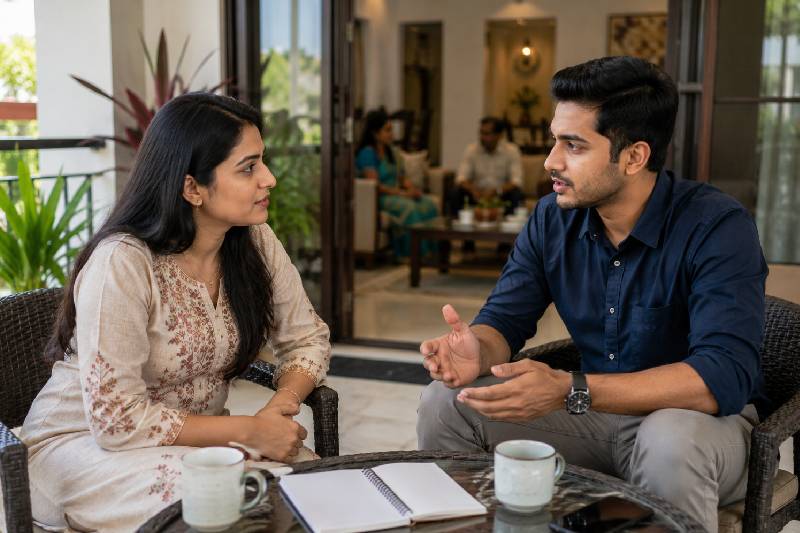
Questions to Ask Before Marriage: A Complete Guide for Couples
Marriage is one of the most important decisions two people can make together.
It is not only about finding someone you like. Marriage is about building a life together, sharing responsibilities, managing differences, supporting each other’s goals, creating a family, and growing together through different stages of life.
In traditional Gujarati families, marriage may also involve parents, relatives, community values, cultural expectations, family traditions, and long-term relationships between two families.
With modern matrimonial websites and matchmaking apps, people now have more opportunities to meet potential partners from different cities, professions, communities, and countries.
But having more choices also makes one thing more important:
Ask the right questions before marriage.
At Gujarati Soulmate, we believe that successful matchmaking should go beyond photographs, education, profession, and basic profile information. Genuine compatibility develops when two people understand each other’s values, expectations, priorities, responsibilities, and future plans.
This guide covers important questions that couples should consider before getting married.
Why Should You Ask Questions Before Marriage?
Marriage is a long-term commitment.
Two people may have excellent education, successful careers, attractive personalities, or similar family backgrounds and still have very different expectations about married life.
For example, one person may want:
- A dual-income household
- Children immediately
- Living independently
- Frequent travel
- A particular lifestyle
while the other may prefer:
- One partner staying at home
- Waiting several years before having children
- Living with parents
- A traditional family structure
- A more conservative lifestyle
Neither preference is necessarily wrong.
The important thing is whether both people understand each other’s expectations and can reach a mutually acceptable decision.
Asking questions before marriage can help identify compatibility, differences, and areas that need further discussion.
1. Questions About Personal Values
Values influence everyday decisions and long-term relationships.
Ask each other:
What are the most important values in your life?
Understanding what your potential partner considers important can reveal a lot about their personality.
They may prioritize:
- Family
- Career
- Financial security
- Independence
- Religion
- Community
- Personal growth
- Travel
- Social responsibility
- Education
What does marriage mean to you?
- People can have very different ideas about marriage.
- For one person, marriage may mean companionship and independence.
- For another, it may mean strong family involvement and shared responsibilities.
- Understanding these expectations early can prevent misunderstandings later.
What does a successful marriage look like to you?
They may prioritize:
- Communication
- Emotional support
- Finances
- Family
- Children
- Career
- Lifestyle
- Personal space
2. Questions About Family Expectations
Family is an important part of many Gujarati marriages.
Before marriage, discuss:
How involved should our families be in our married life?
Some couples prefer independent decision-making, while others want parents to be closely involved.
Ask:
- How often should we visit parents?
- How often should we visit parents?
- How will we handle family functions?
- How should major family decisions be made?
Do you expect us to live with your parents?
This is one of the most important practical questions.
Discuss whether you prefer:
- Joint family
- Nuclear family
- Living near parents
- Living in another city
- Living overseas
What responsibilities do you have toward your parents?
Understanding family responsibilities before marriage is extremely important.
Discuss:
- Financial support
- Medical responsibilities
- Regular visits
- Family business
- Sibling responsibilities
- Future caregiving
3. Questions About Career and Professional Goals
Career decisions can significantly affect married life.
Ask:
How important is your career to you?
Understand whether your partner considers their career:
- Essential
- Important
- Flexible
- Secondary to family responsibilities
Would you relocate for your partner's career?
This is particularly important for:
- IT professionals
- Doctors
- Engineers
- Entrepreneurs
- NRI professionals
- Government employees
- Corporate professionals
Discuss whether either partner would consider moving to another city or country.
What are your career goals for the next five to ten years?
Talk about:
- Promotions
- Business expansion
- Higher education
- International opportunities
- Entrepreneurship
- Career breaks
4. Questions About Money and Finances
Money is one of the most important practical areas of married life.
However, couples often avoid discussing finances before marriage.
That can create unnecessary stress later.
Ask:
How do you manage your money?
Understand whether your partner is generally:
- A saver
- A spender
- An investor
- Financially conservative
- Comfortable with debt
What are your financial goals?
Discuss:
- Buying a house
- Buying a car
- Investments
- Retirement
- Business
- Travel
- Children's education
How should household expenses be managed?
Will expenses be:
- Shared equally?
- Divided based on income?
- Managed through a joint account?
- Managed separately?
There is no universal answer.
The important thing is to agree on a system that both partners consider fair.
Do you have existing financial commitments?
This can include:
- Loans
- Business liabilities
- Family responsibilities
- Education loans
- Property-related commitments
Important financial information should be discussed honestly before marriage.
5. Questions About Children
Children can be one of the most important topics to discuss before marriage.
Ask:
Do you want children?
Both partners should be honest about their expectations.
When would you like to have children?
You may have different expectations regarding timing.
Discuss:
- Immediately
- After a few years
- After financial stability
- After career development
- No specific timeline
How many children would you ideally like?
You do not necessarily need the exact same answer, but you should understand each other’s expectations.
Who will take care of the children?
Discuss:
- Parenting responsibilities
- Daycare
- School
- Grandparents
- Career adjustments
- Household responsibilities
6. Questions About Parenting
Wanting children and agreeing on parenting are two different things.
Ask:
What kind of parent do you want to be?
Discuss your views about:
- Discipline
- Education
- Technology
- Schooling
- Extracurricular activities
- Religion
- Independence
What role should grandparents play?
In many Gujarati families, grandparents can play an important role in children’s lives.
Discuss how much involvement you expect.
How will we divide parenting responsibilities?
Parenting should ideally be viewed as a shared responsibility.
7. Questions About Lifestyle
Compatibility does not mean having identical personalities.
But significant lifestyle differences should be discussed.
Ask:
What does your ideal weekend look like?
For example:
- Staying at home
- Visiting family
- Travelling
- Meeting friends
- Outdoor activities
- Working
How often do you like to travel?
Travel expectations can vary significantly.
How important is social life to you?
For example:
- Friends
- Parties
- Family gatherings
- Social events
- Community events
How much personal space do you need?
Healthy relationships require both togetherness and individual space.
8. Questions About Food Preferences
Food habits can be particularly important in Gujarati families.
Ask:
Are you vegetarian or non-vegetarian?
Are there specific foods you avoid?
Do you follow Jain, Vaishnav, or other dietary practices?
How should food be managed at home?
Discuss:
- Cooking responsibilities
- Eating habits
- Dining outside
- Festivals
- Family food traditions
Gujarati Soulmate also supports lifestyle and food-preference-based matchmaking for individuals looking for compatible Gujarati partners.
9. Questions About Religion and Cultural Values
Cultural compatibility can be important for many families.
Ask:
How important is religion in your daily life?
Which festivals are important to you?
Do you expect your partner to follow specific traditions?
How should religious or cultural practices be handled after marriage?
How should children be introduced to cultural traditions?
These conversations are especially useful when families come from different cultural or community backgrounds.
10. Questions About Community and Family Traditions
Community preferences can sometimes play an important role in Gujarati matchmaking.
Depending on family expectations, couples may discuss:
- Community
- Sub-caste
- Family traditions
- Cultural practices
- Marriage customs
- Festivals
- Family ceremonies
Gujarati Soulmate helps individuals explore profiles from different Gujarati communities and backgrounds.
However, couples should remember that community compatibility is only one part of a successful marriage.
11. Questions About Where You Will Live
Location can significantly affect married life.
Ask:
Where do you want to live after marriage?
Possible options include:
- Hometown
- Mumbai
- Ahmedabad
- Surat
- Vadodara
- Bengaluru
- Delhi
- Another Indian City
- USA
- Canada
- UK
- Australia
- UAE
- Another Country
Would you be willing to relocate?
This question is particularly important for NRI and professionally established profiles.
Do you want to live independently or with family?
Discuss this honestly before marriage.
12. Questions About NRI and Overseas Life
If one partner is living overseas, additional questions are important.
Ask:
What is your current residency status?
Where exactly do you live?
What is your work situation?
Do you plan to stay overseas permanently?
Would you consider returning to India?
Would your spouse be expected to work?
What lifestyle should we expect overseas?
How often would we visit India?
NRI matchmaking requires additional communication because the couple may have different expectations about immigration, careers, family visits, and lifestyle.
Do you want to live independently or with family?
Discuss this honestly before marriage.
13. Questions About Household Responsibilities
Marriage involves many everyday responsibilities.
Ask:
How should household work be divided?
Discuss:
- Cooking
- Cleaning
- Shopping
- Bills
- Laundry
- Household management
- Family responsibilities
Do not assume that one partner will automatically take responsibility for everything.
14. Questions About Personal Space
Healthy relationships require respect for individuality.
Ask:
How much personal time do you need?
Do you enjoy spending time with friends independently?
How do you feel about your partner travelling without you?
How should personal hobbies be handled?
Do you expect to share everything?
Having personal interests and friendships does not necessarily weaken a marriage.
Healthy boundaries can strengthen relationships.
15. Questions About Communication
Communication is one of the most important parts of marriage.
Ask:
How do you handle disagreements?
People deal with conflict differently.
Some prefer immediate discussion.
Others need time to think before talking.
What happens when you are angry?
Do you prefer talking immediately or taking some space?
How should important decisions be made?
How do you express affection?
Understanding communication styles can prevent many misunderstandings.
16. Questions About Conflict Resolution
Disagreements are normal in relationships.
The important question is how couples handle them.
Ask:
What is unacceptable behaviour during an argument?
How should we resolve disagreements?
Are you comfortable apologizing?
How should we handle disagreements involving parents?
Should serious disagreements involve a trusted third person or counsellor?
The goal is not to avoid every disagreement.
The goal is to learn how to handle disagreements respectfully.
17. Questions About Emotional Support
Marriage should ideally provide emotional companionship.
Ask:
What kind of emotional support do you expect from your partner?
How do you respond when you are stressed?
How can your partner support you during difficult times?
How comfortable are you discussing personal problems?
What makes you feel appreciated?
These questions can help couples understand each other’s emotional needs.
18. Questions About Health and Well-Being
Health information can be sensitive and should be discussed respectfully and at an appropriate stage.
Couples may need to discuss relevant health matters that could affect married life or future family planning.
Ask:
Are there any important health considerations I should know about?
Are there ongoing medical responsibilities?
How do you approach health and fitness?
What lifestyle changes might be important after marriage?
Sensitive health information should always be handled respectfully and privately.
19. Questions About Previous Relationships
If either person has had previous relationships, the conversation should be handled with maturity.
The purpose should not be interrogation.
Instead, focus on information that is relevant to the future relationship.
For second-marriage or remarriage situations, discuss:
- Previous marital status
- Children
- Family responsibilities
- Legal status where relevant
- Future expectations
Honesty is particularly important when information may materially affect the marriage.
20. Questions for Divorcee, Widow, Widower and Second-Marriage Profiles
For remarriage, additional discussions may be appropriate.
Ask:
What are your expectations from your second marriage?
How do you want to approach your previous relationship history?
Are there children?
What responsibilities will continue after marriage?
How will both families be involved?
What are your expectations about living arrangements?
What kind of emotional support do you need?
These conversations should be handled sensitively and without judgment.
Gujarati Soulmate provides matrimonial matchmaking opportunities for individuals looking for:
- Second Marriage
- Remarriage
- Divorcee Matrimony
- Widow Matrimony
- Widower Matrimony
- Single Parent Matrimony
21. Questions About Social Media and Digital Boundaries
Modern relationships also involve digital communication.
Ask:
How much of our relationship should be shared online?
Are you comfortable with your partner posting photographs?
How should social media interactions with friends and former partners be handled?
Should private conversations remain private?
Digital boundaries can prevent unnecessary misunderstandings.
22. Questions About Friends and Social Relationships
Ask:
How important are friendships to you?
How often do you meet friends?
Are you comfortable with your partner maintaining independent friendships?
How should opposite-gender friendships be handled?
Mutual trust and clear boundaries are more important than rigid assumptions.
23. Questions About Travel
Travel can be a major lifestyle factor.
Ask:
How often do you like to travel?
Do you prefer luxury travel or budget travel?
Do you enjoy family trips?
Would you travel internationally?
How should travel expenses be managed?
Understanding travel preferences can reveal lifestyle compatibility.
24. Questions About Career Breaks and Life Changes
Life rarely follows a perfectly predictable plan.
Ask:
What would happen if one partner needed a career break?
Would you support higher education after marriage?
How would we handle relocation?
What if one partner wants to start a business?
How would we handle a temporary loss of income?
Discussing possible life changes can prepare couples for uncertainty.
25. Questions About Business and Entrepreneurship
For entrepreneurs and business owners, work can be closely connected to personal life.
Ask:
How much time does your business require?
Do you expect your spouse to participate in the business?
Would the business require relocation?
How do you separate business and family finances?
Would the business require relocation?
These questions can be particularly important when considering professionally established Gujarati profiles.
26. Questions About Education and Personal Growth
Personal development does not stop after marriage.
Ask:
Do you want to pursue further education?
Would you support your partner's education?
Do you plan to learn new skills?
How important is professional growth?
Supporting each other’s growth can strengthen a long-term relationship.
27. Questions About Household Finances
Go beyond basic income discussions.
Talk about:
- Monthly expenses
- Savings
- Investments
- Insurance
- Loans
- Property
- Business finances
- Family financial responsibilities
- Retirement planning
- Children's future expenses
Financial transparency can help prevent future misunderstandings.
28. Questions About Major Purchases
Go beyond basic income discussions.
Ask:
When should we buy a house?
Should we rent or purchase initially?
What type of car or vehicle do we need?
How much should we save before making major purchases?
How should large financial decisions be made?
Couples should ideally establish a decision-making process before major purchases.
29. Questions About Retirement and Long-Term Life
Marriage is not only about the first five years.
Think about the next twenty or thirty years.
Ask:
Where do you want to live after retirement?
Do you want to travel after retirement?
How important is financial independence?
What lifestyle do you imagine later in life?
Long-term planning can help couples understand whether their visions align.
30. Questions About Personal Deal-Breakers
Everyone has certain boundaries.
Ask:
What are your non-negotiables?
These might relate to:
- Smoking
- Alcohol
- Food
- Religion
- Location
- Children
- Career
- Family
- Lifestyle
- Financial responsibilities
Being honest about deal-breakers can save both people time and emotional stress.
31. Questions About Expectations From a Spouse
Ask:
What qualities are most important to you in a spouse?
Possible qualities include:
- Honesty
- Loyalty
- Kindness
- Education
- Ambition
- Family orientation
- Emotional maturity
- Independence
- Communication
- Financial responsibility
Then ask:
What do you expect from yourself as a spouse?
This second question is equally important.
Marriage should not only be about what you expect from another person.
It should also be about what you are prepared to contribute.
32. Questions to Ask Yourself Before Saying Yes
The most important questions are sometimes the ones you ask yourself.
Do I feel respected?
Can I communicate openly with this person?
Do I feel comfortable being myself?
Do our major life goals align?
Can we disagree respectfully?
Do I trust this person?
Are we financially compatible?
Are our expectations about children aligned?
Are our family expectations manageable?
Do I genuinely want this marriage?
Am I saying yes because I want to—or because I feel pressured?
These questions can help you make a more thoughtful decision.
33. Questions Families Can Discuss Before Marriage
Families may also need to discuss practical matters.
Possible qualities include:
What are the family's expectations?
Where will the couple live?
What are the career plans?
Are there important family responsibilities?
What are the expectations regarding festivals and family functions?
Are there cultural or community traditions that matter?
How involved will both families be?
However, families should remember that the final marriage decision belongs primarily to the individuals getting married.
34. What You Should Not Do During Matrimonial Discussions
Asking questions is important, but how you ask them matters too.
Avoid:
Interrogating
Do not turn the conversation into an interview.
Judging
Do not immediately criticize a person’s answers.
Comparing
Avoid comparing your potential partner with siblings, friends, or previous matches.
Pressuring
Do not pressure someone into answering highly personal questions before they are comfortable.
Making Assumptions
Never assume that someone will change after marriage.
Ignoring Differences
Do not ignore major differences simply because you like the person.
35. How to Have Difficult Conversations
Some conversations can feel uncomfortable.
For example:
Interrogating
- Money
- Children
- Previous marriage
- Family responsibilities
- Ambition
- Family orientation
- Career plans
- Living arrangements
- Health
- Religion
- Lifestyle
Choose an appropriate time and private environment.
Use phrases such as:
"I would like to understand your expectations about..."
instead of:
"Why do you want...?"
This makes the conversation more collaborative.
36. Questions to Ask During the First Conversation
You do not need to discuss everything during the first meeting.
You can ask:
- What do you enjoy doing in your free time?
- What is important to you in life?
- What are your career goals?
- What kind of lifestyle do you prefer?
- What are your expectations from marriage?
- How important is family to you?
- Where would you ideally like to live?
- What do you enjoy doing with your family?
The purpose of the first conversation is to understand the person—not complete a checklist.
37. Questions to Ask Before Engagement
Once both people are seriously considering marriage, deeper discussions become appropriate.
Discuss:
- Finances
- Career
- Children
- Living arrangements
- Family responsibilities
- Lifestyle
- Food preferences
- Religion
- Community
- Health matters relevant to marriage
- Previous marriage where applicable
- Long-term goals
This stage is about ensuring that major expectations are understood before making a formal commitment.
38. A Practical Pre-Marriage Compatibility Checklist
Use this checklist before saying yes.
- Personal values
- Marriage expectations
- Family involvement
- Living arrangements
- Career goals
- Relocation
- Financial expectations
- Savings and debt
- Children
- Parenting
- Lifestyle
- Food preferences
- Religion/culture
- Community expectations
- Household responsibilities
- Personal space
- Communication style
- Conflict resolution
- Health considerations
- Previous marriage, if applicable
- NRI/residency matters
- Long-term goals
You do not need identical answers to every question.
The goal is to understand differences and decide whether you can work with them together.
39. How Gujarati Soulmate Helps With Better Matchmaking
Gujarati Soulmate is designed to make matrimonial discovery more convenient for Gujarati individuals and families.
Members can explore profiles based on factors such as:
- Age
- Education
- Profession
- Location
- Community
- Lifestyle
- Food preferences
- NRI status
- Family background
- Marital status
- Partner expectations
The platform can help individuals discover potential matches, but genuine compatibility requires communication between the people involved.
Gujarati Soulmate combines the convenience of online Matchmaking with the family-oriented approach traditionally associated with a Marriage Bureau.
40. Finding the Right Gujarati Life Partner
Gujarati families are diverse, with people living across India and around the world
Gujarati Soulmate can help connect individuals from locations such as:
Gujarat
Ahmedabad, Surat, Vadodara, Rajkot, Gandhinagar, Bhavnagar, Jamnagar, Anand, Bharuch, Navsari, Valsad, Mehsana, Junagadh, Morbi, Bhuj, and Gandhidham.
Maharashtra
Mumbai, Thane, Navi Mumbai, Pune, Nashik, and Nagpur.
Other Indian Cities
Delhi, Bengaluru, Hyderabad, Chennai, Gurugram, Noida, Kolkata, Jaipur, Indore, Bhopal, Chandigarh, Udaipur, Jodhpur, and other cities.
International Locations
USA, Canada, UK, Australia, New Zealand, UAE, Dubai, Singapore, Germany, France, South Africa, Kenya, Ireland, Netherlands, Switzerland, and other countries.
This makes it possible to explore matches beyond your immediate city or social circle.
41. Questions Matter More Than Perfect Profiles
A matrimonial profile can tell you:
- Age
- Education
- Profession
- Location
- Height
- Family background
- Lifestyle
- Interests
But a profile cannot tell you everything.
You cannot determine from a profile alone:
- How someone handles disagreement
- How they communicate under stress
- How they treat family members
- How flexible they are
- How they respond to difficult situations
- Whether your personalities are compatible
- Whether you feel emotionally comfortable with them
That is why meaningful conversations are so important.
42. Do You Need to Agree on Everything?
No.
A healthy marriage does not require two people to have identical opinions.
You may have different:
- Hobbies
- Personalities
- Career interests
- Food preferences
- Social habits
- Travel preferences
What matters is whether you can respect each other’s differences.
However, major disagreements about fundamental issues such as children, finances, living arrangements, family responsibilities, or long-term location should not be ignored.
43. Compatibility Is About Understanding, Not Perfection
Many people search for a “perfect” life partner.
But there may be no perfect person.
Instead, look for someone with whom you can build:
- Trust
- Respect
- Communication
- Emotional support
- Shared goals
- Mutual understanding
- Partnership
The right partner is not necessarily someone who agrees with everything you say.
It can be someone who respects your differences and is willing to build a future together.
44. Final Questions Before Saying "Yes"
Before making your final decision, ask yourself:
Do I trust this person?
Do I feel respected?
Can I communicate honestly?
Can I discuss difficult topics without fear?
Are our expectations about children compatible?
Are our financial expectations manageable?
Are our family expectations realistic?
Are our career and location plans compatible?
Can we resolve disagreements respectfully?
Do I feel comfortable being myself?
Am I genuinely happy about this decision?
Would I choose this person even without external pressure?
If you can answer these questions honestly, you may have a much stronger understanding of your compatibility.
Frequently Asked Questions
1. What are the most important questions to ask before marriage?
Important areas include marriage expectations, family, finances, career, children, lifestyle, communication, living arrangements, health, religion, and long-term goals.
2. Should couples discuss finances before marriage?
Yes. Financial expectations, savings, debts, expenses, investments, and family responsibilities can significantly affect married life.
3. Should we discuss children before marriage?
Yes. Couples should discuss whether they want children, preferred timing, parenting expectations, and family responsibilities.
4. Should couples discuss living with parents?
Yes. Living arrangements should be discussed openly because expectations about joint or nuclear families can differ significantly.
5. What questions should I ask an NRI matrimonial profile?
Discuss residency status, employment, location, future plans, career expectations, lifestyle, relocation, family visits, and expectations about your life overseas.
6. What should I ask before a second marriage?
Discuss previous-marriage circumstances that are relevant to the future, children, ongoing responsibilities, legal status where applicable, living arrangements, and expectations from the new marriage.
7. Should families be involved in the discussion?
Family involvement can be important in many Gujarati marriages, but couples should also have private and honest conversations about their own expectations.
8. How many questions should I ask before marriage?
There is no fixed number. The goal is not to complete a checklist but to understand the important areas of your future life together.
9. What if we disagree on important issues?
Do not automatically ignore major disagreements. Discuss them openly and determine whether you can reach a mutually acceptable understanding.
10. Can Gujarati Soulmate help me find a compatible partner?
Gujarati Soulmate helps individuals and families discover Gujarati matrimonial profiles based on preferences such as age, education, profession, location, community, lifestyle, and other relevant criteria.
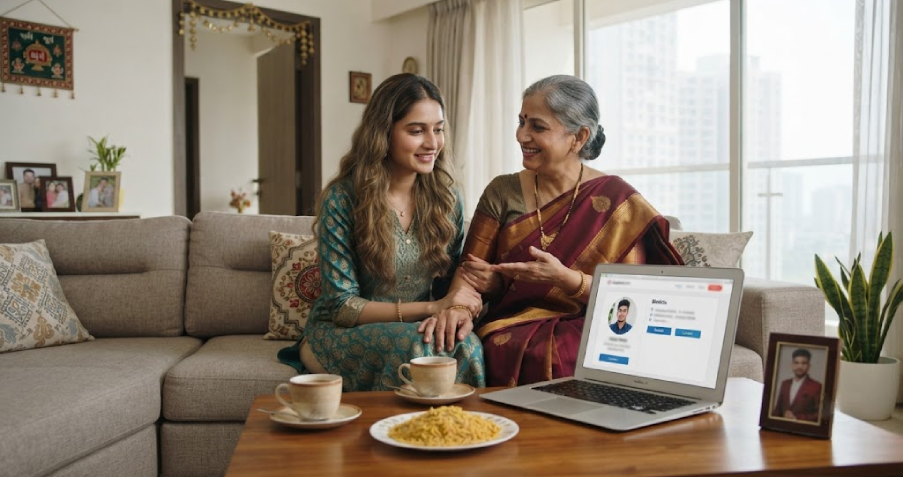
Conclusion: Ask Questions, Understand Each Other, Then Decide
Marriage is not simply about finding someone who looks good on paper.
It is about finding someone with whom you can build a life.
Before saying yes, take the time to understand each other’s:
- Values
- Expectations
- Family responsibilities
- Career plans
- Financial approach
- Lifestyle
- Communication style
- Views about children
- Living arrangements
- Long-term goals
You do not need to have identical personalities or opinions.
What matters is whether you can understand each other, respect differences, communicate honestly, and build a future together.
Gujarati Soulmate is designed to make the search for a Gujarati life partner more convenient by bringing individuals and families together through modern Matchmaking and a trusted Marriage Bureau approach.
Take your time. Ask meaningful questions. Listen carefully. Discuss difficult topics honestly.
It is about finding the right person with whom you can build a meaningful life.
Find Your Gujarati Soulmate
Explore Gujarati matrimonial profiles, discover compatible matches, and begin your journey toward a relationship built on trust, understanding, respect, and shared expectations.
Gujarati Soulmate – Where Meaningful Matchmaking Begins.